 By admin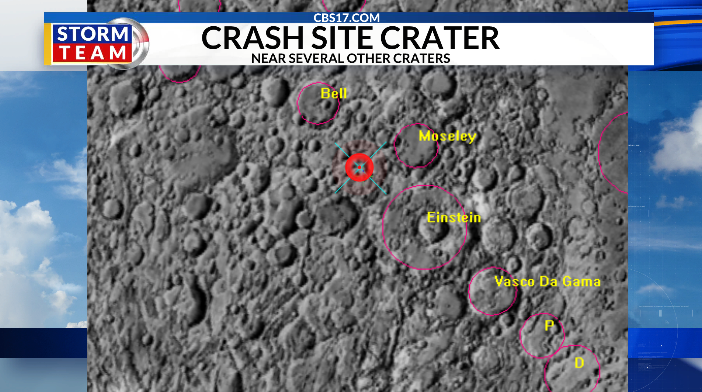
RALEIGH, N.C. (WNCN) — We’re used to hearing about meteor impacts with the moon. But a collision on target for early Wednesday morning is a bit more unusual.
Read more Rain becomes more isolated as temperatures climb across central NC
A five-story upper stage of a Falcon 9 SpaceX rocket is set to strike the lunar surface at around 5,400 miles per hour.
The impact will be on the upper left edge of the moon, when viewed from Earth. But, unfortunately, it probably won’t be seen from Earth.
Only those with a powerful telescope might be able to catch a glimpse. But even that will be of the plume of dust kicked up by the impact, not the surface strike itself.
Even so, the rocket is expected to hit the moon at around 2:35 a.m. Eastern Daylight Time on Wednesday morning.
Read more PGA Tour regular season ends what has been a strange year of no one dominating
Thankfully, the strike poses no danger to anyone back on Earth.
The impact is expected to make a new crater on the moon, very close to multiple other craters – including the famous Einstein Crater. It is far from the only space debris to strike the moon, with each Apollo mission from 13 through 17 sending some part of their rocket on a collision course with the lunar surface.
This particular piece of space junk has been orbiting the Earth for the past year, along with the tens of thousands of other pieces of debris orbiting the Earth at any given time.
Fortunately, most of those, as with the Falcon 9 rocket upper stage, pose no threat to Earth. It just serves as a reminder there’s always something going on numerous miles above our heads.
Read more Former FIFA VP Prince Ali cites ‘blackmail’ by Infantino-led soccer body over unpaid prize money