 By admin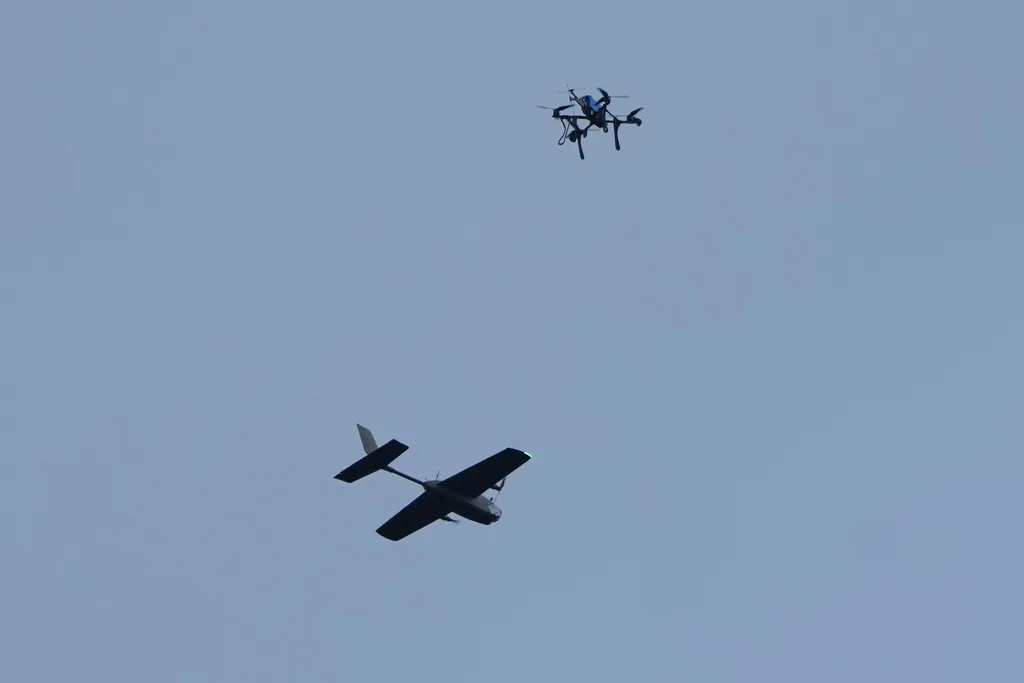
DURHAM, N.C. (WNCN) — The U.S. Army is teaming up with Duke University, six other academic institutions and Lockheed Martin for a $24 million effort to develop the foundational science to defend against drone attacks in the future, Duke officials announced Wednesday.
Read more AI leaders speak to government ministers on second day of G20 meetings in Chapel Hill
The Russia-Ukraine War has indicated that the world’s battlefields are rapidly evolving and military tactics are relying increasingly on uncrewed systems, such as aerial drones, military officials have said.
Ukraine’s use of “unmanned aerial vehicles” — or UAVs — has also enabled the country’s smaller military to hold off Russia and deliver blows deep inside the country, crippling oil infrastructure since the spring.
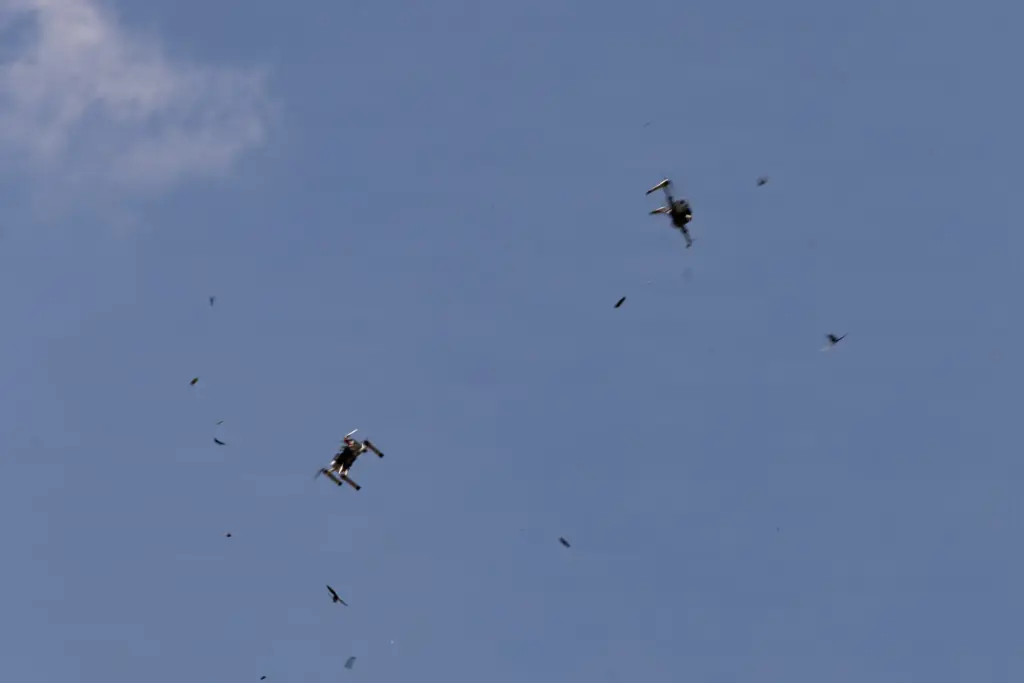
The U.S. Army Combat Capabilities Development Command Army Research Office (DEVCOM ARO) is funding a $24 million team to develop the foundational science required to engineer and build systems to counter unmanned aerial attacks, the release said.
The director of the new effort, Miroslav Pajic, Ph.D., is Duke University’s director of master’s studies and a professor in the Department of Electrical and Computer Engineering, Duke said.
The new team will be called “Inducing Cyber and Physical Effects in Unmanned Aerial Systems via Cyber-Electromagnetic Convergence.” Officials are calling the effort a “center,” but it will not be a physical space, Duke media relations said.
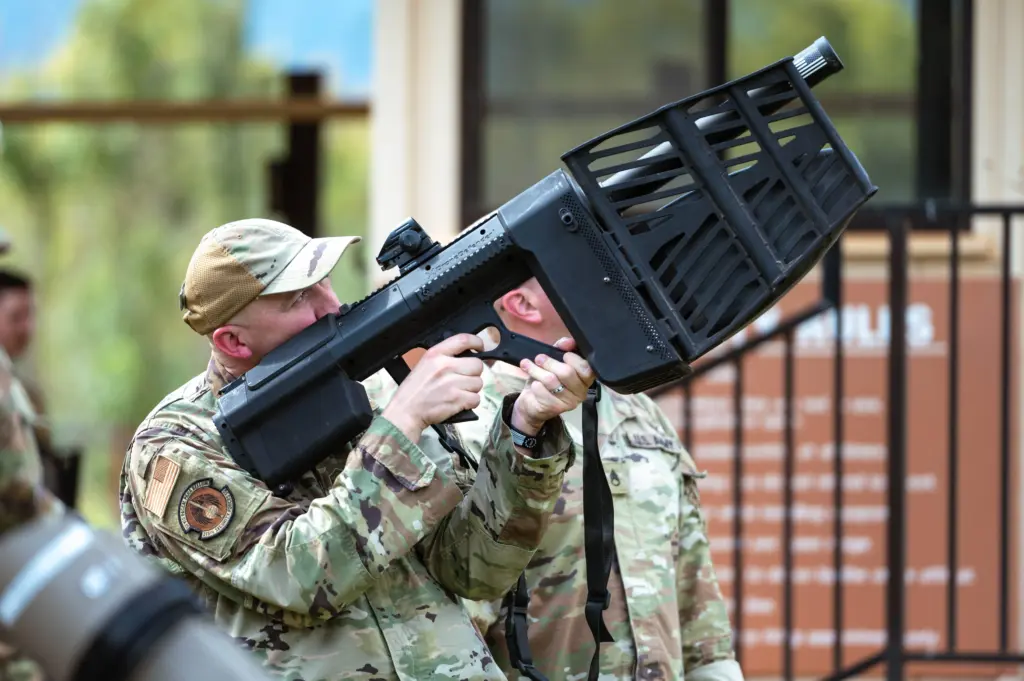
Master Sgt. David Rogers, 315th Security Forces Squadron fire team leader, aims a DroneDefender weapon at a small unmanned aircraft system during Exercise NEXUS FORGE Feb. 5, 2025, at Schofield Barracks, Hawaii. Adversaries continue to refine drone tactics, increasing the need for adaptable C-sUAS training and emerging technologies to maintain airspace dominance. (U.S. Air Force photo by Master Sgt. Jeffrey Grossi) 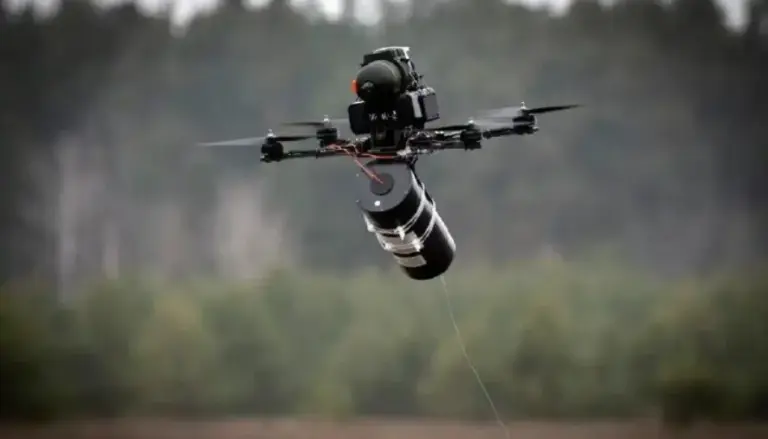
US Army image of a drone using a fiber optic spool A Bumblebee V1 drone under manual control intercepts practice target at Fort Bragg, N.C., April 23, 2026. The Bumblebee has been fielded for use as an autonomous ground-to-air, and now air-to-air interceptor designed to make contact with and incapacitate enemy drones. (U.S. Army photo by Staff Sgt. Cory Reese) 
OLEKSIIEVO-DRUZHKIVKA, UKRAINE – JUNE 14: Fiber optic cables from Russian drones hang in the background of a damaged apartment building on June 14, 2026 in Oleksiievo-Druzhkivka, Donetsk Oblast, Ukraine. The rural settlement of Oleksiievo-Druzhkivka is located ten kilometers from Kostiantynivka, where active fighting take place during ongoing Russian-Ukrainian war. (Photo by Alex Nikitenko/Global Images Ukraine via Getty Images) 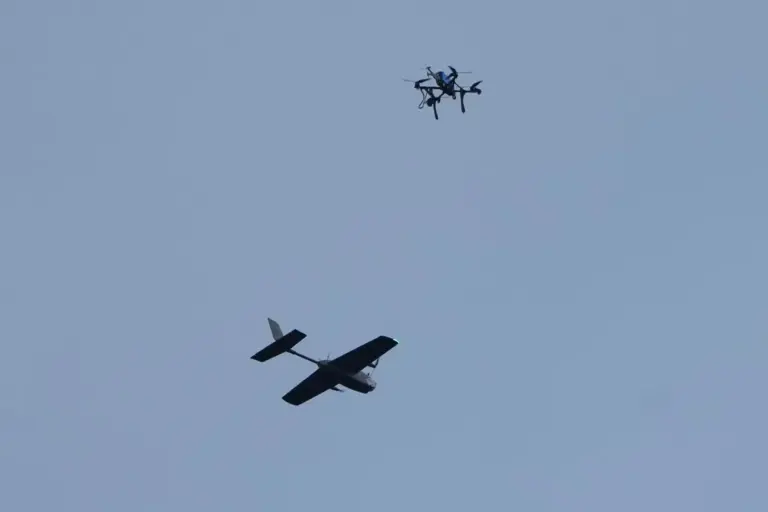
A drone hunter intercepts a target drone during drills at the Yatagan School for Unmanned Aerial Systems in the Kyiv region, Ukraine, Thursday, March 19, 2026. (AP Photo/Efrem Lukatsky)
“Their mandate is to develop the fundamental tools and automated procedures needed to detect, thwart and even take control of enemy unmanned aerial vehicles, with minimal system interaction and limited knowledge of the target UAVs,” a Duke news release said.
Read more NASCAR drivers in favor of return to Chase format, saying it will yield a more legitimate champion
Taking control of UAVs has become more difficult as the Ukraine-Russia war has dragged on — with each side now employing fiber optic lines for control instead of relying on radio or satellite signals.
Also, AI-enabled drones autonomously navigate the final miles of strikes deep inside enemy territory, bypassing heavy radio jamming.
MORE FROM CBS 17
DURHAM COUNTY NEWS
Duke to lead $24M US Army anti-drone warfare research
Man killed after car hits parked vehicle in Durham
Baby goats with rabies may have been in Durham Co.
“Duke has a proud history of close partnerships with the military, which is why we are thrilled to expand that partnership with this nationally vital center to advance drone technologies,” said Alec Gallimore, provost and chief academic officer at Duke.
Duke officials said the effort is the “culmination and convergence of multiple decades-long research” pursued by some of Duke Engineering’s faculty.
The news release said that the new team plans to serve as a focal point for North Carolina’s “rapidly growing defense ecosystem” bringing together the Army, other defense and government stakeholders, researchers, startups, and established industry leaders to accelerate collaboration and move new technologies toward real-world national security impact.
Read more Canes announce Hurricanes Hockey Network, with games to be broadcast on Prime Video