 By admin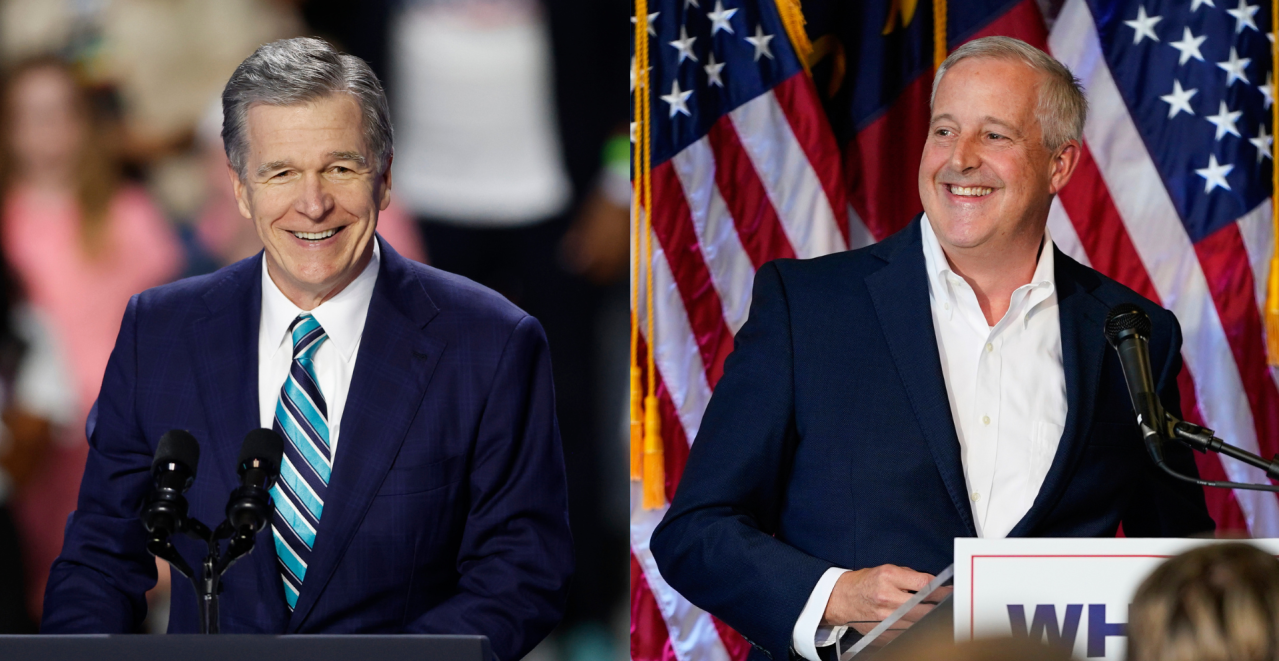
SALISBURY, N.C. (WNCN) — Democrat Roy Cooper holds a 14-point lead over Republican Michael Whatley in the race for North Carolina’s U.S. Senate seat, a poll released Tuesday shows.
Read more Cubs manager Craig Counsell perplexed by rainout and irked by ‘terrible rule’
The poll from Catawba College-YouGov was based on weighted results from 1,000 North Carolina residents, who took part in an online survey from June 1 to June 10. 905 of the recipients were likely votes in the Senate race.
Cooper maintains distance from Whatley
The poll found Cooper, who served as governor from 2017 to 2025, was supported by 48% of respondents. Whatley, the chair of the Republican National Committee from 2024 to 2025, received 34% support. 15% were undecided.
The results are similar to the March survey, which showed Cooper leading Whatley by 15 points.
Michael Bitzer, director of Catawba College’s Center for North Carolina Politics & Public Service, attributed Cooper’s lead to stronger support from independents.
Among their own parties, Cooper is supported by 80% of Democrats and Whatley is supported by 77% of Republicans. But 50% of independents back Cooper, while only 23% back Whatley.
“Cooper’s advantage is not simply a function of Democratic support,” Blitzer said in a statement. “His lead is being driven by independents, who currently support him by more than two-to-one over Whatley. That independent vote can often be a decisive factor in statewide North Carolina elections.”
Despite the numbers being in Cooper’s favor, Bltizer noted nearly a quarter of independents are undecided about the election as of the survey.
Blitzer also credited the polling numbers to a traditional midterm environment that favors the party not in the White House.
“This year appears to be setting up as a classic mid-term environment: a referendum on the president and his party,” Blitzer continued in his statement. “Cooper has a commanding portion of those North Carolinians who disapprove of the president, which is a majority of likely voters so far.”
According to the poll, Cooper has the support 77% of North Carolina residents who disapprove of Trump. Two-thirds of those who approve of Trump are supporting Whatley.
Cooper also has more support from both men and women, although he holds only a six-point advantage among men compared to his 20-point lead among women, according to the poll.
In the state’s regions, the poll found Cooper has the lead among city voters by 37 points, rural voters by 11 points, and suburban voters by five points. Whatley has a five-point lead in surrounding suburban/exurban counties.
North Carolina’s Senate race is considered to be the most competitive of the 2026 midterms and critical to determining which party will control Congress next year. The seat is currently held by Republican Thom Tillis, is not seek re-election to a third term.
Democrats have not won a Senate race in North Carolina since 2008.
Independents sink Trump’s approval in North Carolina
In the same poll, Republican President Donald Trump received a 43% approval rating from North Carolina residents, while 54% disapproved.
Trump’s numbers in the state were slightly higher than his national approval, which the poll attributed to support from North Carolina Republicans.
The poll showed a partisan divide of 86% Republicans approving of the president and nearly 80% of Democrats disapproving, but independents played a key factor in putting Trump’s approval below 50%.
According to the poll, two-third of independents disapprove of Trump, whereas 28% approve.
Blitzer made note of how Trump is viewed in North Carolina’s various regions.
“While six in ten North Carolinians who live in major cities disapprove of Trump, 55% in urban suburbs and rural communities also disapprove,” Bitzer noted. “Trump performs best in the state’s exurban counties that surround the urban counties, where 54% approve and 44% disapprove.”
By contrast, the poll found Democratic Gov. Josh Stein holds a 53% approval rating and a 27% disapproval. Stein received approval from three-quarters of Democrats, 53% of independents, and 36% of Republicans.
A shift in how North Carolina Republicans see themselves
The poll looked at other political debates in North Carolina, including whether Republicans saw themselves as being more aligned with Trump or the party. Last October and this January, 55% chose Trump and 44% chose the party, but the new poll showed 68% now identify more with the party than Trump, a 24-point change.
“This is a significant shift among Republicans in North Carolina,” Bitzer said in his statement. “GOP voters remain overwhelmingly Republican, but many appear less likely than they were six months ago to define themselves primarily through their support for Donald Trump.
“This shift seems to signal a noticeable ‘cooling’ to Trump-centered Republican identity, driven by suburban and female respondents,” he continued in his statement. “Even among Trump’s own 2024 voters, there was a significant movement away from being a ‘Trump Republican’, from 60% in January down to 43% in June.
“This could indicate Trump fatigue inside the Republican coalition — voters remain Republican-aligned, but perhaps less Trump-personalized.”
Other elections, topics in North Carolina
A majority in North Carolina disapproved of both parties in Congress, according to the poll, with 54% disapproving of Republicans and 51% disapproving of Democrats. 13% approved of both parties, 30% approved of only Democrats, 27% approved of only Republicans, and 30% disapproved of both.
Despite the general disapproval of both parties, Democratic U.S. candidates have an eight-point lead over Republicans, 46% to 37%, an increase of three points from the March survey. 13% are undecided, according to the poll.
“When analyzed by those who approve versus disapprove of the parties in Congress, the overall eight-point Democratic advantage remains,” Bitzer said in a statement. “Among those who disapprove of both parties, Democrats are 18 points ahead of Republicans, 48 to 30%. Of those who approve of both parties, Democrats hold an 8-point advantage, 48 to 40%.”
According to the poll, North Carolina residents are split on who they think will control both chambers of Congress in the 2026 midterms; 37% believe it will be the Democrats and 37% believe it will be the Republicans.
“One party is obviously going to be disappointed come November’s results,” Bitzer noted. “While a quarter of North Carolinians foresee a divided Congress, partisans within each camp have clear majorities saying their party is going to take over, or retain, control of Congress.”
In the North Carolina General Assembly races, according to the poll, Democrats have a six-point advantage in the state House and an eight-point advantage in the state Senate. The North Carolina Supreme Court race currently has Democratic incumbent Anita Earls with a five-point advantage over Republican challenger Sarah Stevens, 40% to 35%, while two in 10 voters are undecided.
The poll found most North Carolina residents, 54% oppose sending U.S. troops to Iran. Only a quarter of residents support such action.
Read more NC mother facing disturbing abuse charges after neighbor rescues children, warrants show
More information about the poll can be found on the Catawba College website.