 By admin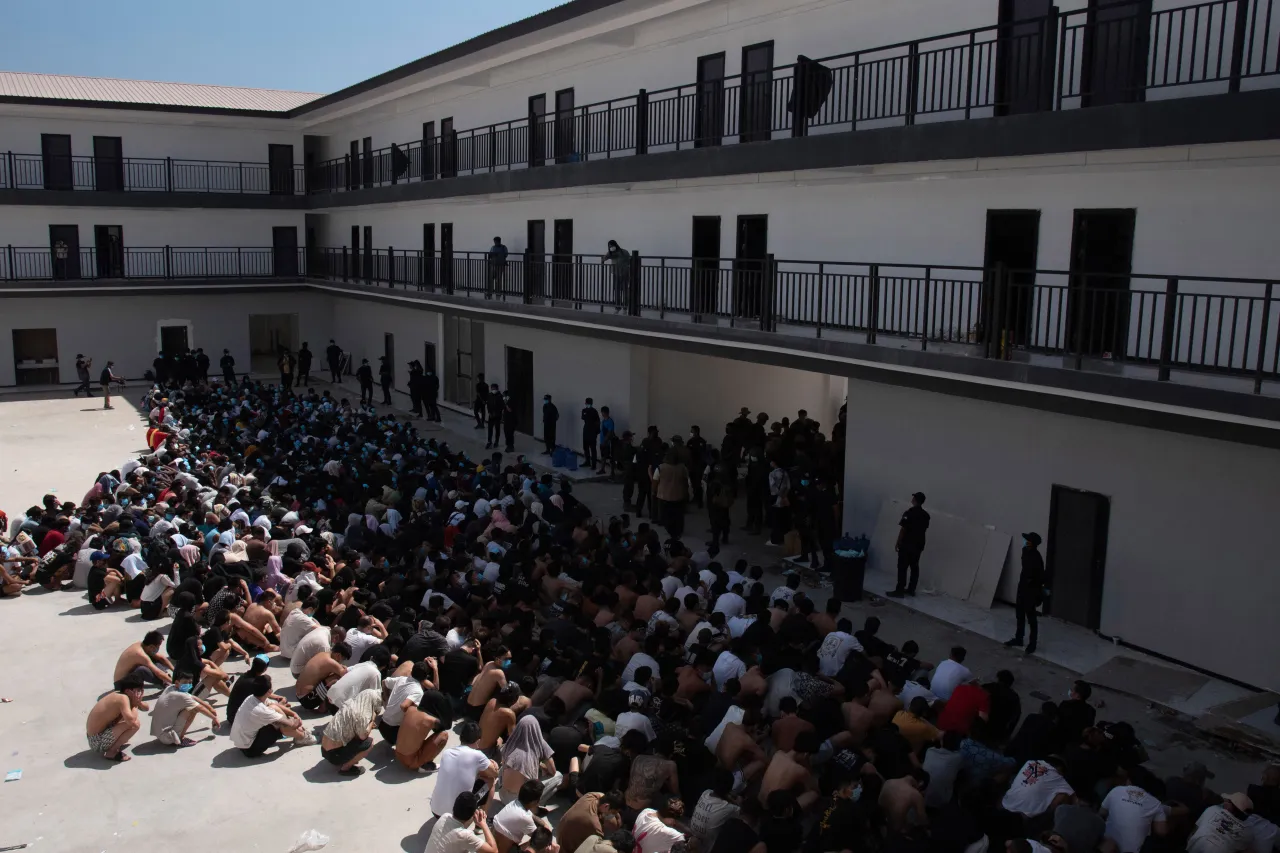
BANGKOK (AP) — Southeast Asia-based criminal groups are using increasingly integrated networks and technology to build a rapidly growing illicit economy with tentacles that reach far beyond Asia, with scams alone causing estimated combined losses of $88.3 billion to $114.1 billion in 2025, a U.N. report says.
Read more Israel is building a miles-long earthen barrier inside Gaza, entrenching its division
The report by the United Nations Office on Drugs and Crime outlines how transnational crime that used to be concentrated in Southeast Asia has expanded to other regions, while global criminal groups are increasingly engaging in drug, human and wildlife trafficking in Asia.
Criminals are using new technologies to launder money through global financial systems and using artificial intelligence to steal from victims worldwide, said the report, released Tuesday.
Children are increasingly at risk
One key finding of the report is the threat to children both from AI and from online gaming, as hundreds of scam compounds scattered across Southeast Asia provide venues for sex trafficking and selling of child sexual abuse content.
“There is a huge jump in AI-generated child sexual images … communicated through encrypted communications platforms,” said Inshik Sim, UNODC researcher and coordinator for the report, told reporters at a briefing at the Foreign Correspondents Club of Thailand.
East Asian crime syndicates are running businesses that use malware, generative AI and deepfakes for sexual extortion and exploitation in a trend that increases risks of in-person abuse as well as livestreamed abuse and grooming of victims. Apart from outright trafficking for the sex industry, victims can be sold into domestic servitude, forced begging and forced labor, among other forms of exploitation, the report says.
Social media and online gaming and gambling also pose dangers for children, the report notes, citing surveys showing that hundreds of children and teens across Southeast Asia are engaged in online gambling, some to the extent of addiction.
Trafficking in drugs, guns tobacco and wildlife is expanding
The report estimates the combined annual sales of illicit drugs in Southeast Asia and nearby countries at up to $109 billion, with seizures of illegal shipments soaring. That includes methamphetamines, heroin and ketamine.
It points to the Sulu-Celebes maritime “triangle” between Indonesia, Malaysia and the Philippines as an increasingly important corridor for shipments of cocaine from Latin America to Asia, with illicit cargoes sometimes embedded in legitimate shipments such as Chinese tea.
The area is also often used for smuggling of wildlife and small arms, the report says.
Read more Tropical Storm Bertha in the Gulf of Mexico moving toward Florida Panhandle and Alabama
Meanwhile, Thailand and Vietnam increasingly are the source of cannabis sent to Japan, where it is illegal, and to Europe, it says.
Earlier this year, authorities in Malaysia’s Sabah seized more than 3 tons of methamphetamine, ketamine and ecstasy in the largest such seizure for Sabah so far.
Money laundering and other tools keep criminals in business
The report outlines how cross border financial and technology networks are supporting what it calls a “criminal service infrastructure” that facilitates global organized crime.
The tools used include cryptocurrency, encrypted and private communications platforms and generative AI to create convincing phishing content, deploy real-time deepfake videos and voice calls. Using AI-powered translations, they can target victims across many languages at the same time, the report says.
Satellite communications also enable scam compounds to operate in places that are remote or subject to close surveillance.
To counter this growing criminal ecosystem, authorities need a coordinated, cross-border strategy that integrates enforcement across data, communications and financial systems, and online services and marketplaces, the report said.
Crackdowns drive scam centers offshore and underground
As authorities in Thailand, China and elsewhere have raided industrial-sized scam centers mostly located in border regions of Myanmar, Laos and Cambodia, criminals have responded by shifting to other parts of the world or operating on a smaller scale.
“They were destroyed, but none of the operations stopped,” said Seong Jae Shin, an analyst and counter-terrorism office at the UNODC.
Read more Pedestrian hit by vehicle on South Saunders Street in Raleigh, police say
Scam centers moved to villas and other properties, he said, going underground.
“It’s much harder for the Cambodian authorities to crack down now,” he said.