 By admin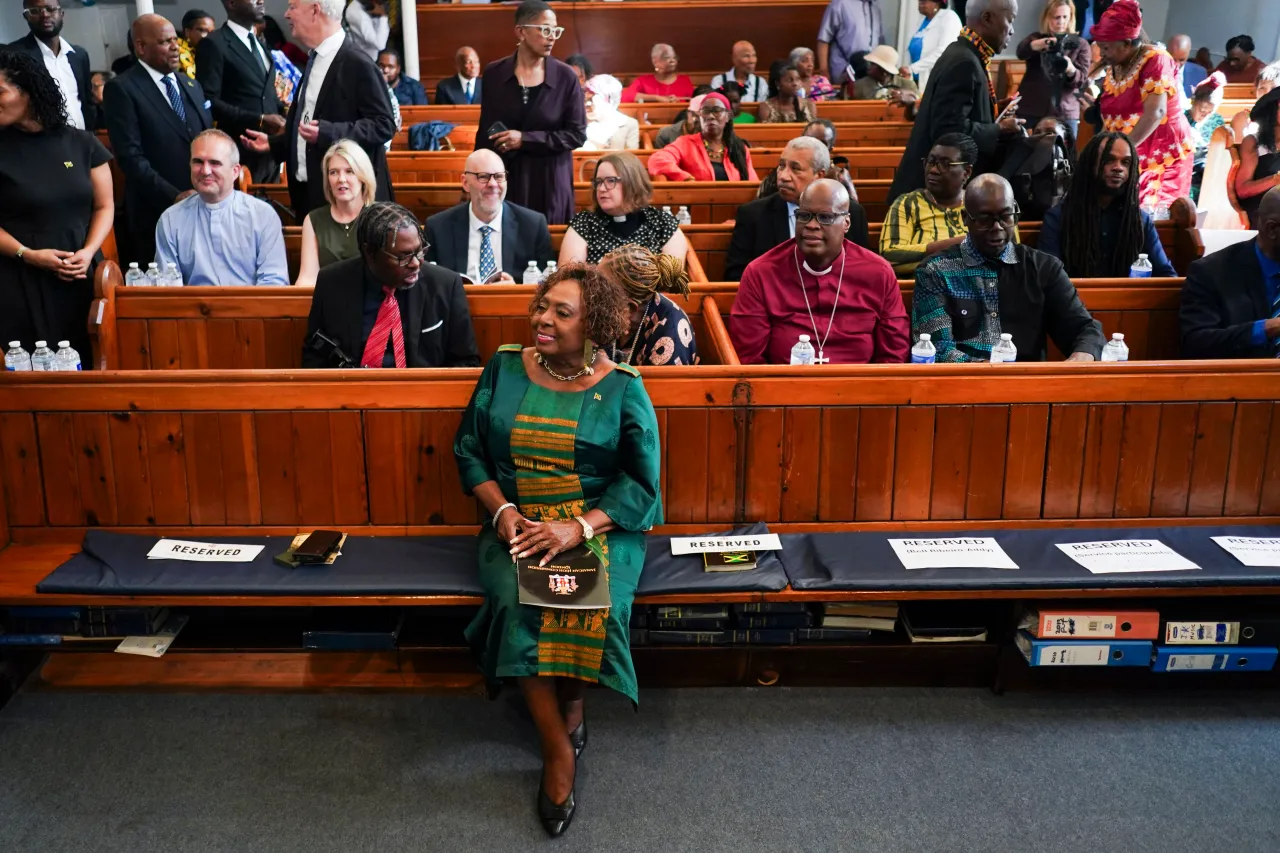
LONDON (AP) — Jamaica is taking its campaign for Britain to pay reparations for the ravages of the trans-Atlantic slave trade to King Charles III.
Read more The US tariff on Canadian imports could send already soaring hockey gear prices even higher
Using legal traditions that stretch back to the early days of the British Empire, Jamaica petitioned the king on Monday to refer a series of questions about slavery, and the U.K.’s responsibility to pay damages, to a committee of the Privy Council, which serves as the highest court for former colonies that retain ties to the British legal system.
While the petition is formally addressed to the king, Charles has no personal say on whether it will be referred to the Judicial Committee of the Privy Council, and he will act on the advice of the government.
The filing was timed to coincide with the anniversary of the day in 1781 when the Liverpool-registered ship Zong set sail from West Africa with 442 enslaved Africans on board. When water supplies ran low on the way to Jamaica, the crew decided to throw 132 men, women and children overboard, calculating that it would be more profitable to file an insurance claim for the lost “property” than to sell their weakened and dehydrated captives for a reduced price.
The massacre helped speed the abolition of slavery but it wasn’t quick
Publicity about the Zong massacre helped fuel the campaign to end slavery in the British Empire. Britain abolished the slave trade in 1807, but it wasn’t until Aug. 1, 1834, that the enslavement of human beings was outlawed.
“In relation to the wrongs that were done, we want answers,” Jamaican Culture Minister Olivia Grange told The Associated Press on Sunday before a church service in south London, the first in a series of events scheduled around the filing.
“Once we get those answers, then our attorneys, our lawyers, will determine what the next move is,” she added.
Jamaica is a leader of the effort to get Britain and other European nations to apologize for their role in the trans-Atlantic slave trade and pay reparations, both for the enslavement of individuals and for the continuing impact on their descendants around the world. Jamaica said the Caribbean Community, which includes 23 states from the Bahamas to Guyana, endorsed the petition.
The king has spoken out on the wrongs of slavery
Although he has stopped short of endorsing reparations, the king has repeatedly expressed his personal commitment to addressing the historic wrongs of slavery. In a 2024 speech to leaders of the Commonwealth, the voluntary association of countries that succeeded the British Empire, Charles said that the “most painful aspects of our past continue to resonate.”
“None of us can change the past,” he added. “But we can commit, with all our hearts, to learning its lessons and to finding creative ways to right inequalities that endure.”
Buckingham Palace said Monday that it has been working closely with the governor-general of Jamaica, the king’s representative on the island who is appointed on the advice of the Jamaican government, to ensure the petition is “properly lodged.”
While acknowledging that slavery was “abhorrent,” the British government has so far rejected demands for either an apology or reparations.
When the United Nations General Assembly in March passed a resolution endorsing reparations as a “concrete step” toward addressing the wrongs of slavery, the U.K. abstained. That was partly because the U.K. believes in the internationally recognized legal concept that the law governing any event is the law of the relevant time, British representative James Kariuki told the U.N.
“There is equally no duty to provide reparation for historical acts that were not, at the time those acts were committed, violations of international law,” he said.
Read more AfD party’s landslide win in eastern Germany tests country’s ‘firewall’ against the far right
Jamaica is taking a political campaign to the courts
Jamaica’s petition is an effort to expand the political campaign for reparations into the legal realm, Grange said.
The petition asks the Judicial Committee to rule on three questions:
— Was the forced transport of African people to Jamaica and their subsequent enslavement illegal because it was contrary to English common law?
— Were the forced transport and enslavement of African people crimes against humanity for which the U.K. bears responsibility?
— Does the U.K. have an obligation to “provide a remedy” to the people of Jamaica for the forced transport and enslavement of their ancestors?
The procedure could boost support for a Jamaican republic even if rejected
Craig Prescott, an expert on constitutional law and the monarchy at Royal Holloway, University of London, said the move was “quite clever” because it seeks to use an obscure constitutional procedure to address one of the biggest issues in Jamaican society.
The right of British people to petition the crown with grievances about the administration of justice stretches back to the Norman conquest of England in 1066, when the king was considered the “fountain of justice throughout his Dominions,” the Judicial Committee of the Privy Council says on its website.
Jamaica’s petition is based on an 1833 law that made the committee the highest court for civil and criminal appeals in the British Empire. When the Empire became the Commonwealth of independent nations after World War II, the committee retained that role for the countries that maintain their legal ties to the U.K.
Prescott expects the petition to be referred to the Judicial Committee, where a panel of U.K. Supreme Court justices will review it and make a ruling.
But, he said, the justices are usually very cautious about granting such petitions because they sidestep standard legal procedures.
“I think, at the very least, the board will look at this with a skeptical eye, not because of questions of whether slavery is wrong or right or otherwise, but just this is a very peculiar legal procedure that is sort of just one on the statute books that rears its head from time to time.”
But rejection of the petition could still be a win for Jamaica.
Prime Minister Andrew Holness has announced plans to sever ties with the British crown and transform his country into a republic.
“It does raise the question of why have a head of state who really does not share the positions that are widely held in Jamaica,” Prescott said. “If those residual links (to Britain) don’t deliver an answer that is what they’re looking for in Jamaica, then you might be looking at severing those links.”
Read more Man, woman seriously hurt in Durham drive-by shooting near NC Central, police say
___
Associated Press journalist Kwiyeon Ha contributed to this report.