 By admin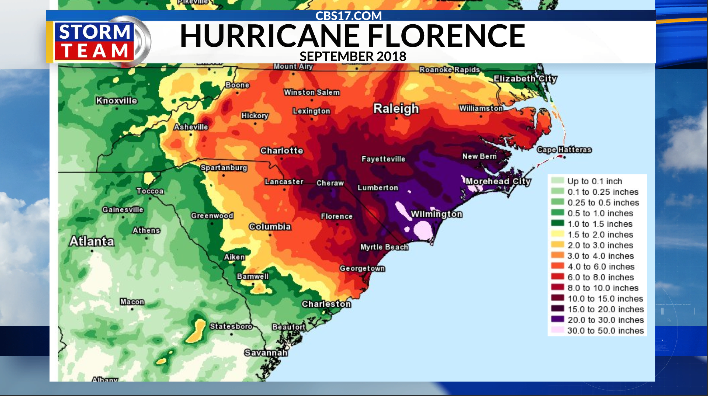
RALEIGH, N.C. (WNCN) — Monday marks eight years since Hurricane Florence roared ashore near Wrightsville Beach in the morning hours of Sept. 14, 2018.
Read more LSU’s Lane Kiffin says ‘both sides won’ when he left Ole Miss, but he still expects ‘hatred’
The storm began as many hurricanes do, with a wave of low pressure coming off the coast of Africa.
As it tracked across the open Atlantic Ocean, Florence climbed all the way to major hurricane status. It topped out as a category four monster as it took aim at the Carolinas and was originally forecast to make landfall as a major hurricane.
Thankfully, the storm weakened in the days before impact. Even so, it was still a category one storm when it pushed ashore in the Cape Fear.
Florence brought numerous tornadoes and widespread reports of gusty winds. But the thing that made Florence so destructive was the amount of rainfall it produced.
Read more Top-ranked Texas likes the view from No. 1 but is focused on long season ahead
The storm slowed to a crawl, moving just a few miles per hour at one point over land. This allowed multiple feet of rain to soak southeast North Carolina, with the greatest amount reported near Elizabethtown, at nearly 36 inches.
Fayetteville received more than 15 inches, despite being further inland, with Raleigh tallying nearly seven inches.
Florence struck four days after the historical peak of hurricane season, as many other impactful North Carolina hurricanes have done throughout history.
Hurricane Hazel remains the strongest and latest hurricane to make landfall in North Carolina, coming ashore in mid-October of 1954.
Read more Protect College Sports Act gets renewed push and fresh opposition as college football returns
It serves as a reminder that hurricane season isn’t over until it’s over.