 By admin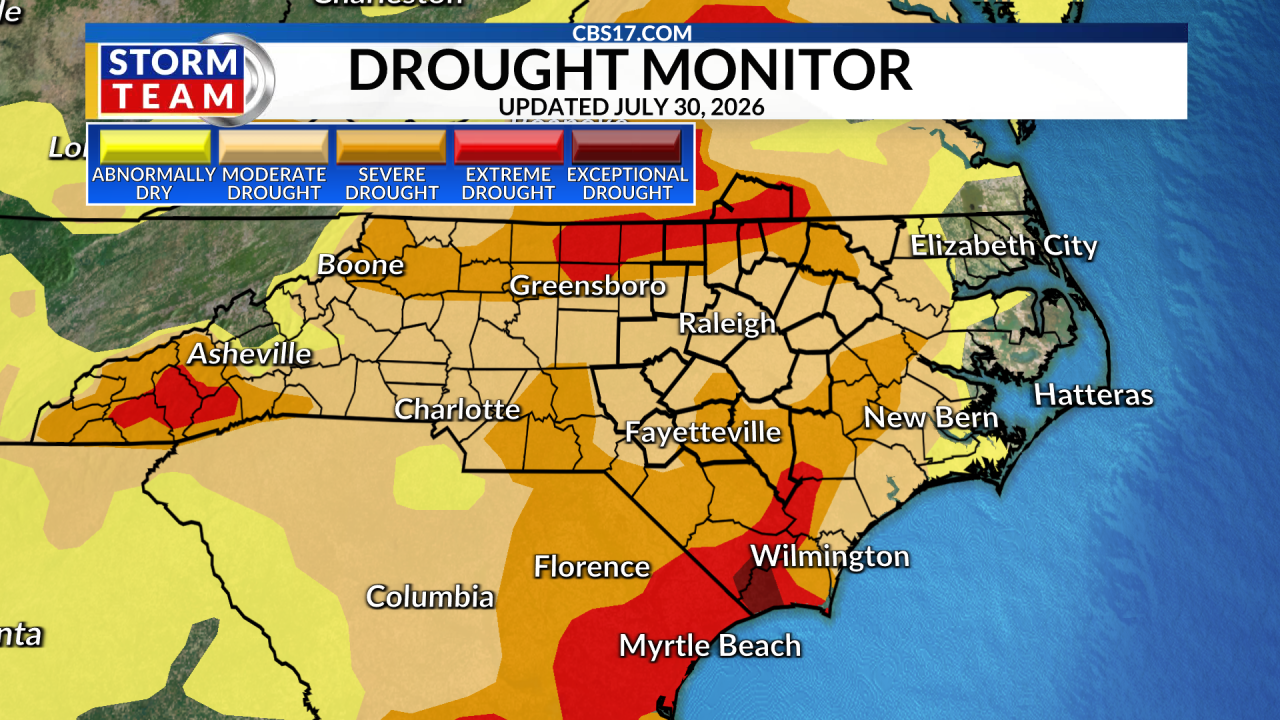
RALEIGH, N.C. (WNCN) — After weeks of much-needed rainfall, drought conditions have significantly improved across central North Carolina, but state officials say residents should continue conserving water because reservoirs and groundwater levels remain below normal despite the recent soaking rains.
Read more Taysom Hill announces the end of his time with the Saints, but not his retirement from the NFL
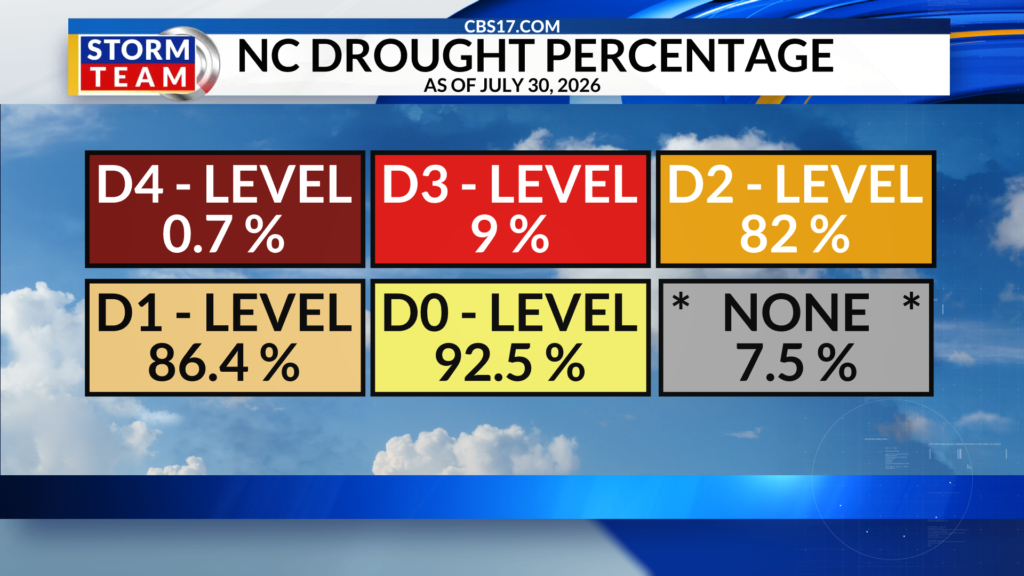
Exceptional drought, the most severe category, has nearly been eliminated statewide, with less than 1% of North Carolina still classified in that category. Extreme drought now covers 8.3% of the state.
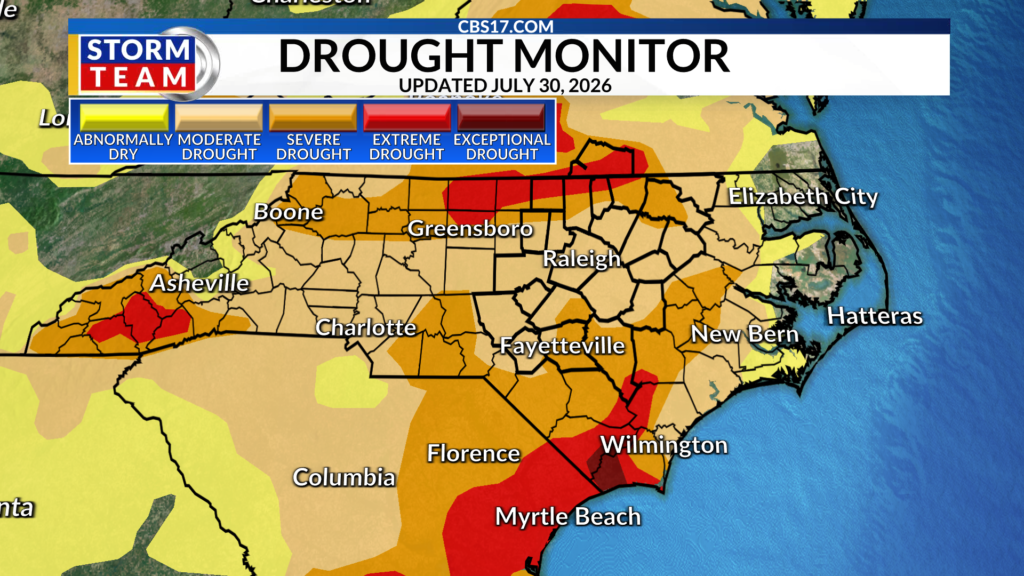
Locally, portions of Sampson, Person, Granville, Vance and Warren counties remain under extreme drought conditions.
Despite the recent improvement, more than 86% of North Carolina is still experiencing at least a moderate drought. However, more than 7% of the state is now drought-free.
The latest drought update was calculated using data collected through 8 a.m. Tuesday, July 28. Additional rainfall since then could lead to further improvements in next week’s report.
Gov. Josh Stein said Thursday that while recent rainfall has improved conditions, North Carolina is “not in the clear yet” after months of exceptionally dry weather.
“Although recent rainfall has made a dent in the problem, we’re not in the clear yet,” Stein said. “I encourage North Carolinians to check their local water system’s conservation status and do their part to use water wisely.”
Department of Environmental Quality Secretary Reid Wilson echoed that message, saying recent downpours have helped but aren’t enough to erase the impacts of months of drought.
Read more How much would it cost UNC Chapel Hill to fire Bill Belichick?
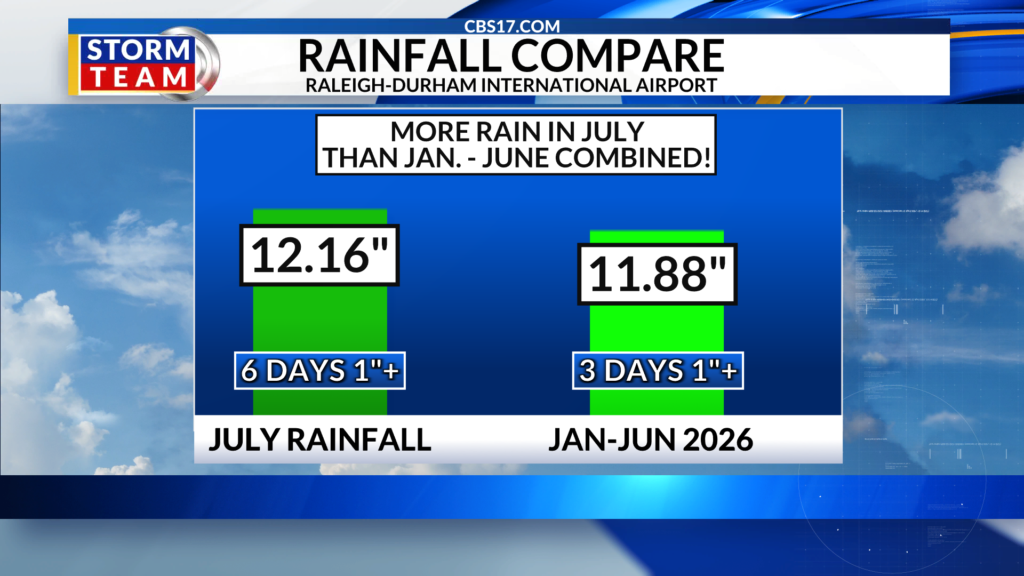
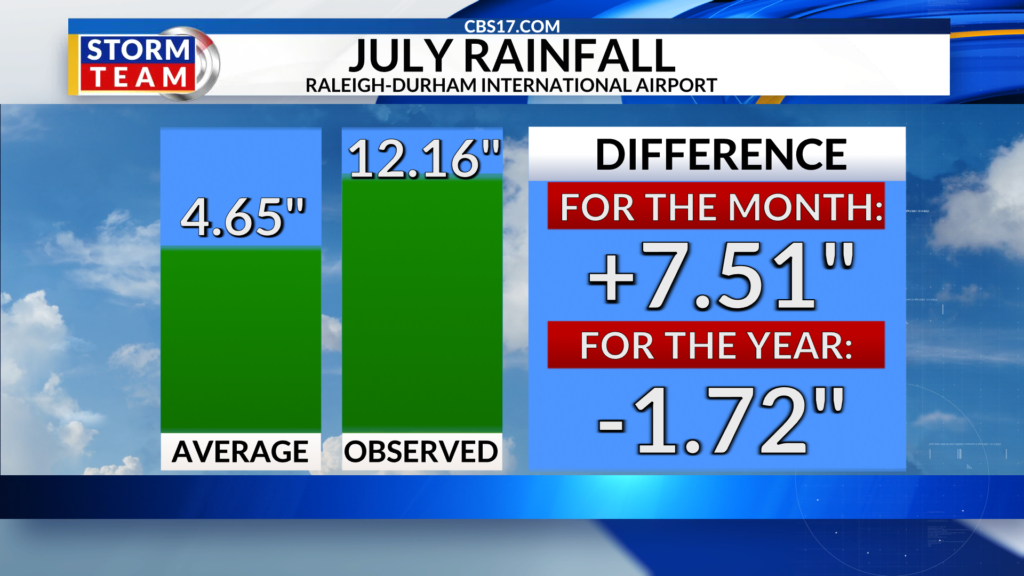
July has been an exceptionally wet month in Raleigh. More than a foot of rain has fallen at Raleigh-Durham International Airport, making it one of the wettest Julys on record. The airport also received more rain in July than it recorded during the first six months of the year combined.
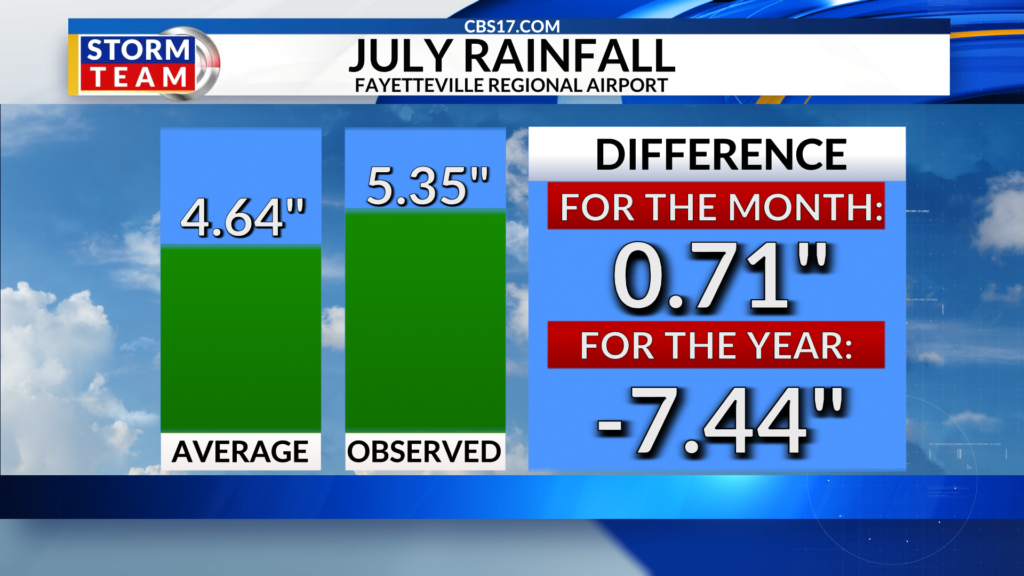
Conditions have been different farther south. Fayetteville recorded just under 5.5 inches of rain during July, only slightly above average for the month. Parts of Cumberland County remain nearly 7.5 inches below normal for the year.
State officials said the recent rainfall has returned many streams to near-normal levels, but reservoirs and groundwater typically recover much more slowly.
For example, Falls Lake remains about 3.1 feet below its normal level for this time of year, while Little River Reservoir is 12.3 feet below normal and Lake Michie is 8.8 feet below normal. Jordan Lake has benefited the most from recent rainfall and is now close to full.
The state continues to encourage residents to conserve water. According to the Department of Environmental Quality, 70 public water systems remain under mandatory water restrictions, while another 68 have voluntary conservation measures in place. Residents are encouraged to check with their local water provider for any watering restrictions or other conservation guidance.
On average, Raleigh receives 4.71 inches of rain in August, while Fayetteville averages 5.36 inches. Continued near- to above-normal rainfall in the coming weeks will be needed for drought conditions to improve further across the state.
Read more Opposition to FIFA’s World Cup private equity plan grows as Asia warns of risks and Europeans meet