 By admin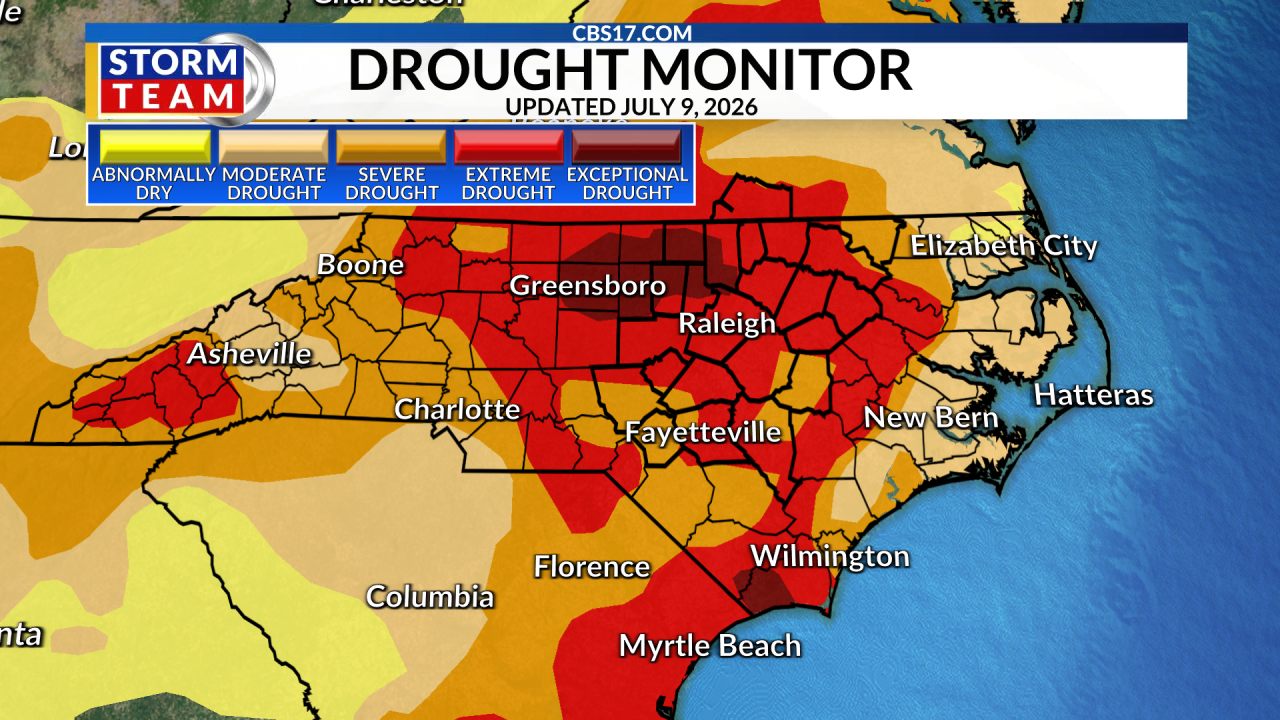
RALEIGH, N.C. (WNCN) — Despite several rounds of heavy rain across central North Carolina this week, the state’s drought conditions worsened overall, according to the latest U.S. Drought Monitor report released Thursday.
Read more Surprise Wimbledon semifinalist Arthur Fery developed his game at Stanford University
The report only includes rainfall recorded through 8 a.m. Tuesday, meaning much of the rain that fell later Tuesday and Wednesday will not be reflected until next week’s update.
Even so, meteorologists said the latest report reinforces a growing reality: while recent storms have provided localized relief, they have not produced the widespread, sustained rainfall needed to reverse months of drought.
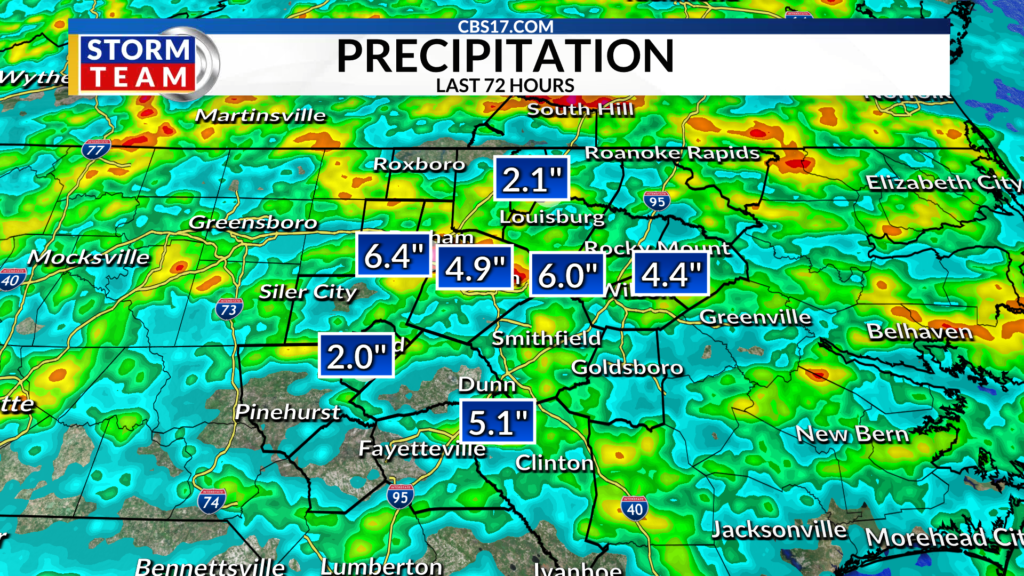
Across portions of the Triangle, several communities picked up multiple inches of rain this week. Since Monday, some areas of Wake County recorded more than 5 inches of rainfall, while parts of Durham and Orange counties received between 2 and 4 inches, according to the Community Collaborative Rain, Hail and Snow Network (CoCoRaHS).
Despite those totals, the state’s second-most severe drought classification expanded considerably.
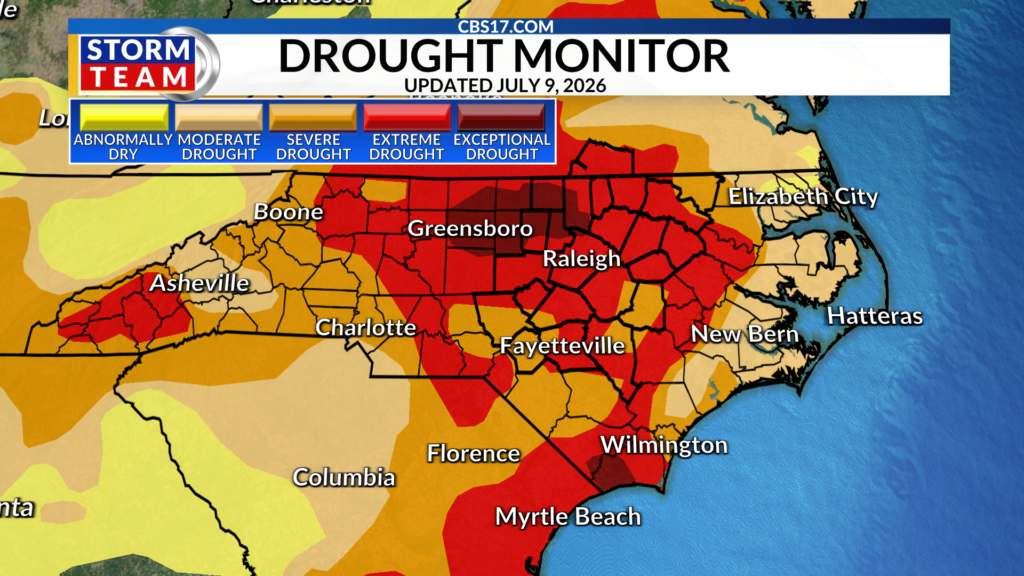
According to Thursday’s report, 43.59% of North Carolina is now in a D3 (Extreme Drought), an increase of 8.19 percentage points from last week’s report.
Meanwhile, 6.2% of the state remains in a D4 (Exceptional Drought) — the most severe category on the U.S. Drought Monitor scale — down slightly from 6.6% one week ago.
One of the largest week-to-week changes occurred in Cumberland County, where 78.87% of the county is now classified in extreme drought, up sharply from 42.3% last week.
The increase follows brief improvements along the Interstate 95 corridor reported one week ago after scattered rainfall. The latest report shows extreme drought has once again expanded across much of that region.
There was some encouraging news in Franklin County, where exceptional drought conditions were eliminated entirely. Last week, 12.45% of the county remained in D4 drought. The latest report shows 0% in the state’s highest drought category.
Read more Yahoo Sports launches college fantasy football leagues featuring Power Four players and Notre Dame
Several Triangle counties also saw significant reductions in exceptional drought coverage:
- Wake County: 3.26% in D4, down from 24.14% last week
- Durham County: 56.94%, down from 95.78%
- Orange County: 68.9%, down from 97.3%
- Granville County: 47.1%, down from 60.79%
- Person County: 78.6%, unchanged
The latest report continues a trend that’s emerged over the past several weeks. While repeated rounds of thunderstorms have chipped away at portions of the state’s exceptional drought, particularly across the Triangle, they have not generated enough widespread rainfall to erase long-term deficits. Instead, much of North Carolina has shifted into extreme drought.
The worsening drought comes as Raleigh continues operating under Stage 1 water restrictions, with city leaders this week granting the city manager authority to move into Stage 2 restrictions if Falls Lake continues to decline and water conservation goals are not met.
According to Raleigh Water, Falls Lake’s water supply pool remains around 62% full and has continued declining by roughly 2% to 3% each week, despite recent rainfall.
“This is a long-term problem that’s not going to go away with an occasional summer thunderstorm,” Raleigh Water Assistant Director Ed Buchan said earlier this week. “We certainly want those and they can benefit us temporarily, and at best usually kind of offset the loss that we typically see in a week… but we’re not going to be gaining ground any time soon.”
Buchan said the drought is especially unusual because it began during the winter and spring, when reservoirs typically refill, making recovery far more difficult than a typical summer dry spell.
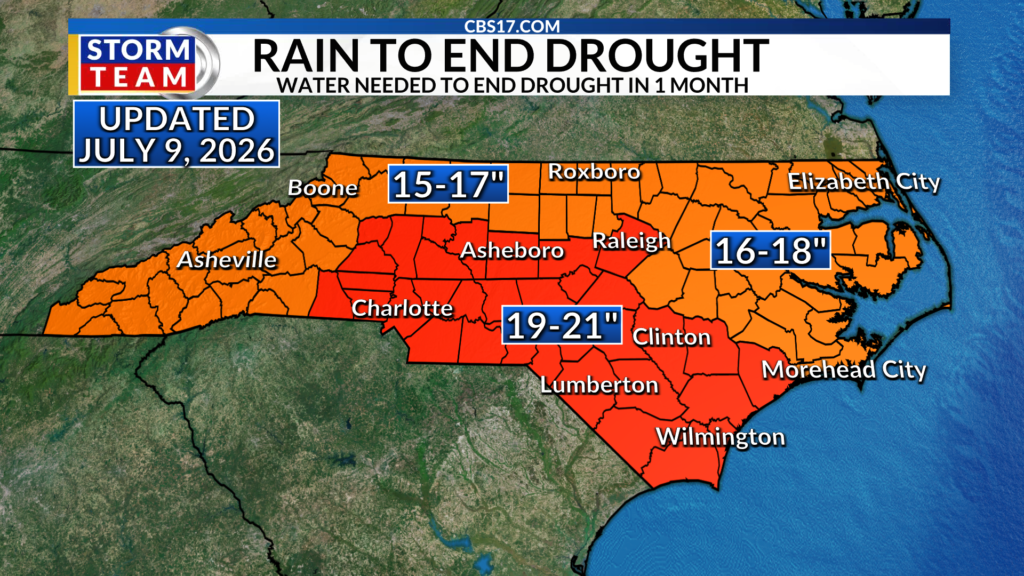
The continued dryness is also reflected in the state’s rainfall deficit. Just two weeks ago, forecasters estimated North Carolina would need 13 to 15 inches of rain within a month to erase the drought. That estimate has now increased to 17 to 20 inches, underscoring how much precipitation is still needed despite recent storms.
Additional rainfall that fell after Tuesday morning’s reporting cutoff will be included in next week’s U.S. Drought Monitor update.
Read more Duke Energy offers free money-saving home inspections