 By admin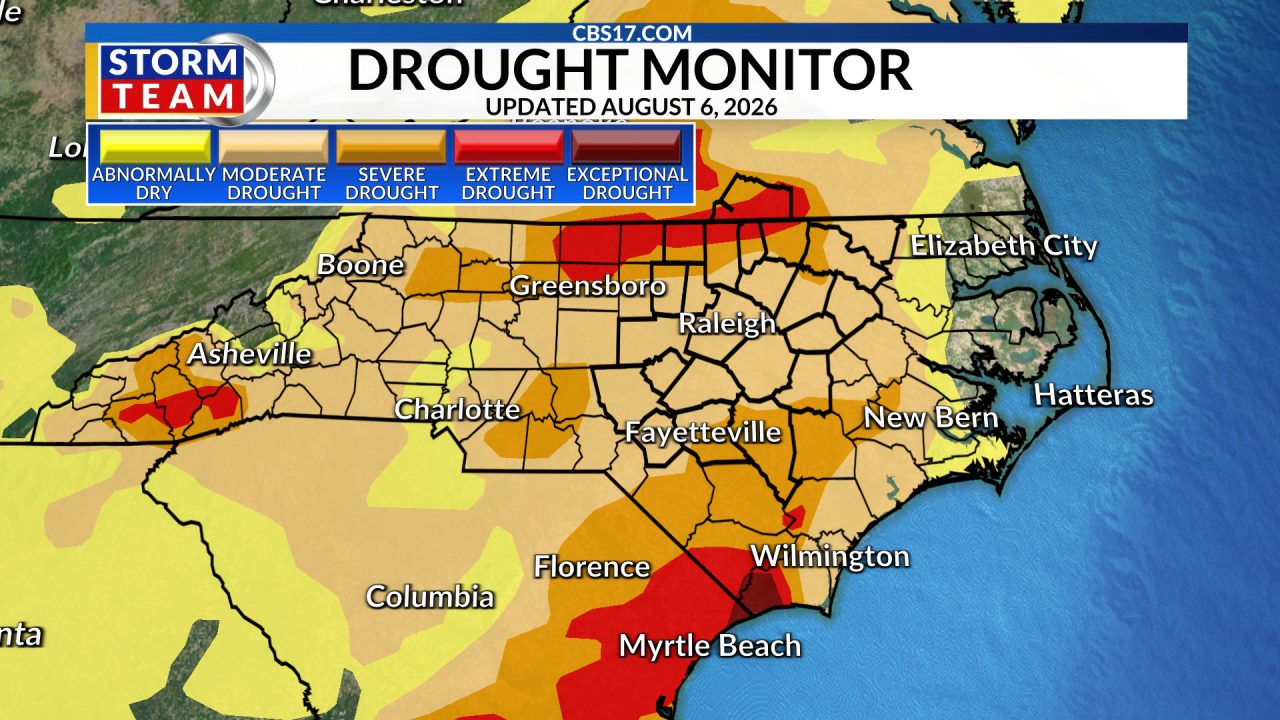
RALEIGH, N.C. (WNCN) — North Carolina’s drought continued to ease this week as another round of beneficial rainfall further reduced the state’s most severe dry conditions, according to the latest U.S. Drought Monitor released Thursday.
Read more Hot & humid weather returns to central NC this weekend
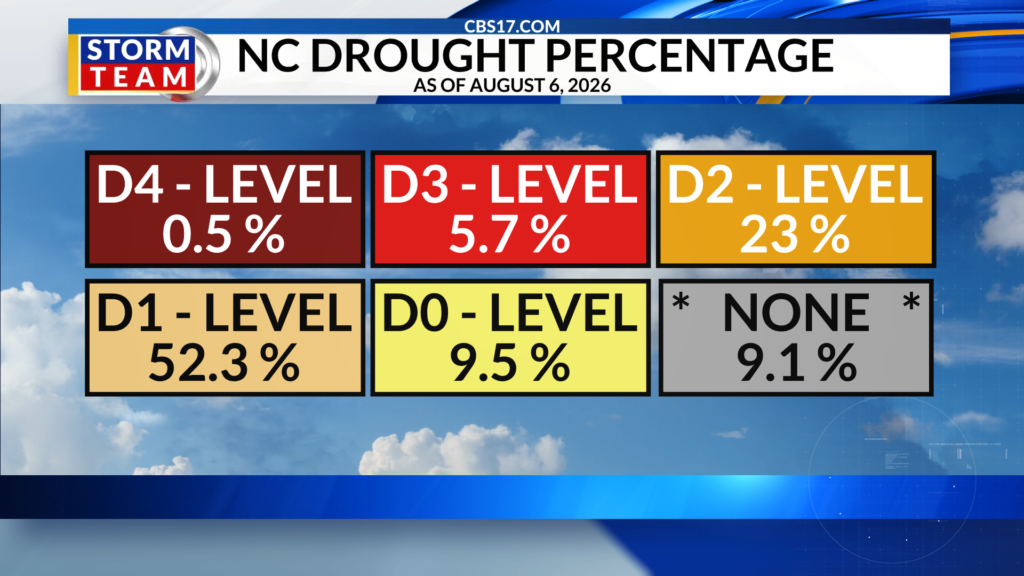
Exceptional drought (D4), the highest level on the monitor’s five-category scale, has now been nearly eliminated statewide, while extreme drought (D3) coverage has fallen to 5.72% of North Carolina. That’s down from 8.3% one week ago.
Even with the improvement, drought remains widespread. More than 81% of the state is still experiencing at least some level of drought, although that’s an improvement from last week’s report, when more than 86% of North Carolina remained in drought.
Locally, D3 conditions continue in Person, Granville, Vance and Warren counties, while much of central North Carolina has seen additional improvement.
Wake County is now entirely classified as moderate drought (D1), while Cumberland County is divided almost evenly between moderate drought (D1) and severe drought (D2).
The latest U.S. Drought Monitor reflects conditions through Tuesday morning, meaning additional rainfall this week could be reflected in next Thursday’s report.
Recent rainfall has varied considerably across central North Carolina.
Since July 1, Raleigh has received 12.35 inches of rain, while Fayetteville has recorded 5.62 inches. Although both cities received enough rainfall to improve drought conditions, Fayetteville remains nearly 8.5 inches below normal for the year, while Raleigh is still about 2.75 inches below average.
Read more Chatham, Moore among central NC counties under severe thunderstorm warning Thursday
The recent rainfall has already produced tangible benefits across the region. Earlier this week, Raleigh lifted its mandatory Stage 1 water restrictions after Falls Lake recovered to 84% capacity following weeks of heavy rain.
Even so, state officials continue to encourage residents to conserve water because reservoirs and groundwater typically recover much more slowly than streams after prolonged drought.
Forecasters say continued rainfall will be needed to sustain the recent progress.
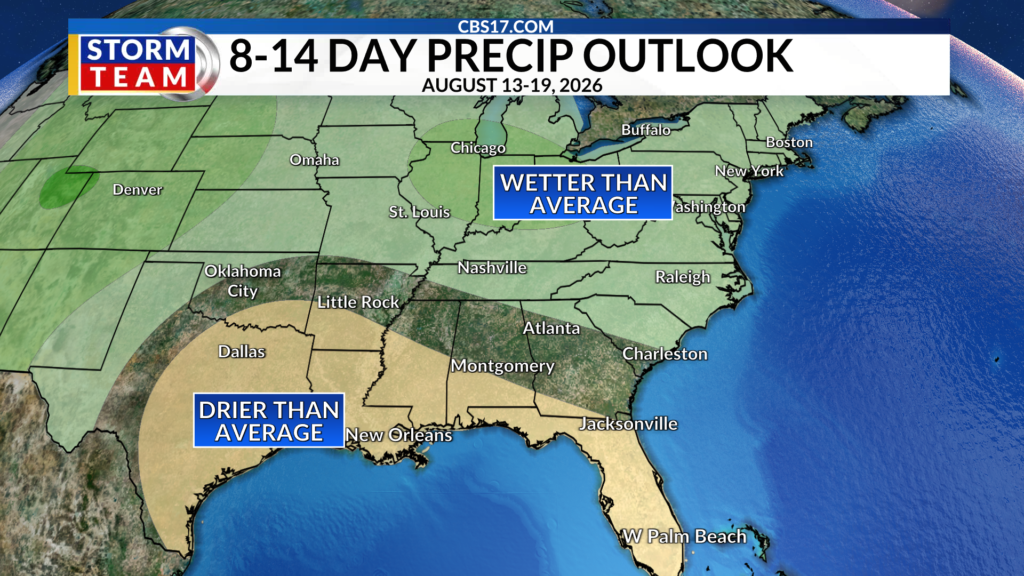
The Climate Prediction Center’s latest outlook favors slightly wetter-than-average conditions across North Carolina through the coming weeks. Raleigh typically receives 4.71 inches of rain during August, while Fayetteville averages 5.36 inches.
Despite the favorable outlook, the National Centers for Environmental Information estimates it would take roughly 16 to 19 inches of rainfall in a single month to completely erase North Carolina’s drought.
While recent storms have dramatically improved conditions across much of the state, meteorologists say additional steady rainfall will be needed before the drought fully subsides.
Read more NOAA lowers predicted number of tropical storms, hurricanes in season forecast update