 By admin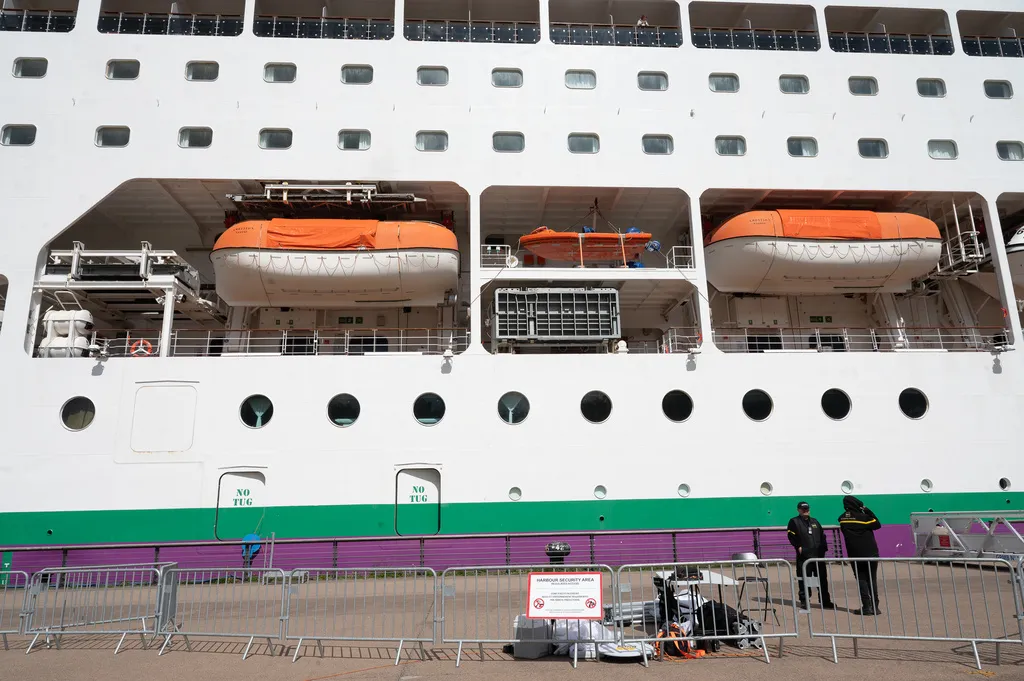
(NEXSTAR) — As global health officials continue to monitor the hantavirus outbreak linked to the MV Hondius cruise ship, French authorities have ordered 1,700 passengers on the British cruise ship Ambition to quarantine due to norovirus. Last week, yet another cruise ship, a Caribbean Princess with 3,100 passengers on board, reported a norovirus outbreak.
Read more WATCH: Rare, endangered jaguar spotted near Arizona-Mexico border
The apparent recent surge in sicknesses aboard cruise liners prompts the question: Are cruises breeding grounds for disease?
Cruises are semi-enclosed environments, explains the Centers for Disease Control and Prevention, where it’s easy for highly contagious diseases to spread. People from all over the world, some of whom may have brought a virus on board, are constantly mixing and interacting in small, poorly ventilated spaces. They’re also spending a long period of time in the same enclosed area, days or weeks at a time.
“If people took week-long airplane rides, I imagine we’d be talking about the same thing,” Dr. Emily Abdoler, an infectious diseases specialist and professor at the University of Michigan Medical School, tells USA Today.
“Age also matters,” writes Vikram Niranjan, assistant professor of public health at the University of Limerick School of Medicine, in an article for The Conversation. “Cruise holidays are especially popular with older adults, and many passengers have long-term health conditions that make infections more serious.”
Norovirus, sometimes called the winter vomiting bug thanks to its gastrointestinal side-effects, is highly contagious. It’s the most common cause of stomach bugs on cruise ships, the CDC says.
However, cruise ships are a relatively rare setting for norovirus outbreaks, accounting for about 1% of the reported outbreaks in the U.S., the agency says. Norovirus cases are more commonly tracked back to long-term health facilities, hospitals, restaurants, schools and daycares.
COVID-19 is another highly contagious virus, and it spread quickly on the Diamond Princess ship in early 2020. Passengers had to quarantine on board as hundreds of passengers and crew members tested positive.
Hantavirus outbreaks, on the other hand, are rare – on cruises or even on land, says Niranjan. The virus isn’t known for spreading person-to-person. Typically, it’s spread by rodents and their droppings.
However, the Andes strain of hantavirus appears to be able to spread between people in very close contact. The outbreak on the MV Hondius is still under investigation, but the current hypothesis, according to the European Centre for Disease Prevention and Control, is the virus was brought on board by a passenger who had been in Argentina or Chile. The Andes strain is endemic in those parts of South America. Once on board, the passenger may have spread it to fellow travelers.
Read more Caterpillar adding 600 jobs at Lee County plant near Sanford to build compact track loaders
Nexstar’s Michael Bartiromo contributed to this report.