 By admin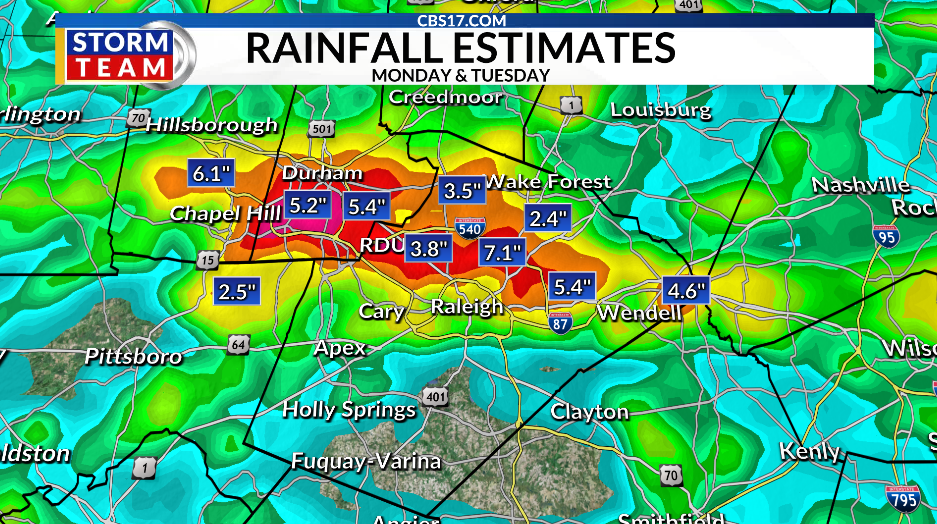
RALEIGH, N.C. (WNCN) — With North Carolina in a drought in all counties — including an extreme or exceptional drought in the Raleigh-Durham area — several parts of central North Carolina received more than 3 inches of rain Tuesday.
Read more 12-year-old girl dies after Neuse River swimming incident in Wake County on Tuesday, deputies say
And, Tuesday was not the only day the area received help from the drought — on Monday, areas in Raleigh saw more than 3.25 inches of rain, according to records.
Storms caused damage on Tuesday, but the rain they brought is forecast to provide some help for water supplies in the Raleigh region.
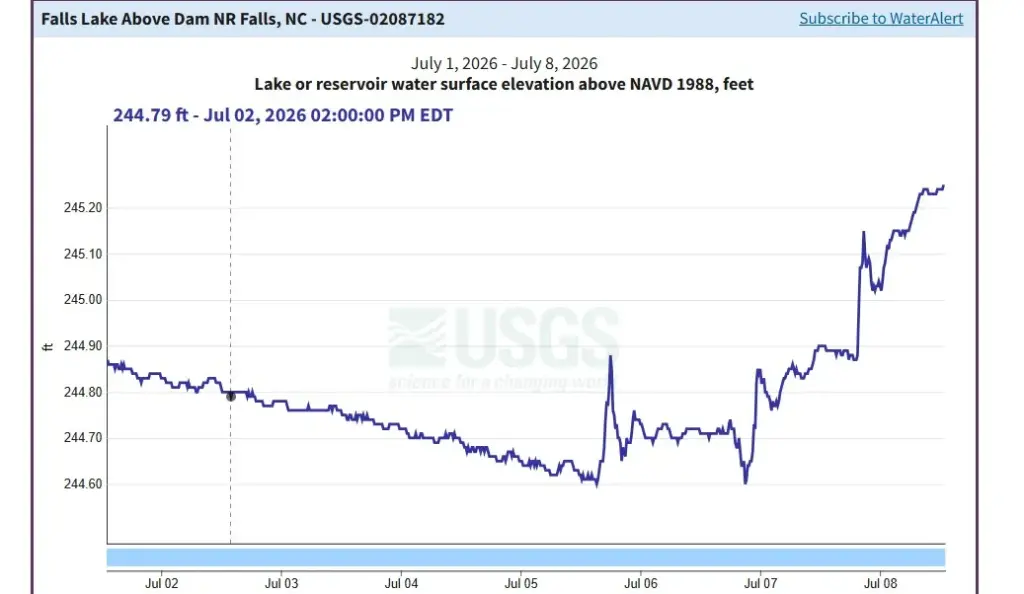
Raleigh implemented water restrictions in April after the city’s main water supply, Falls Lake, hit 85 percent — it’s now down to 62 percent.
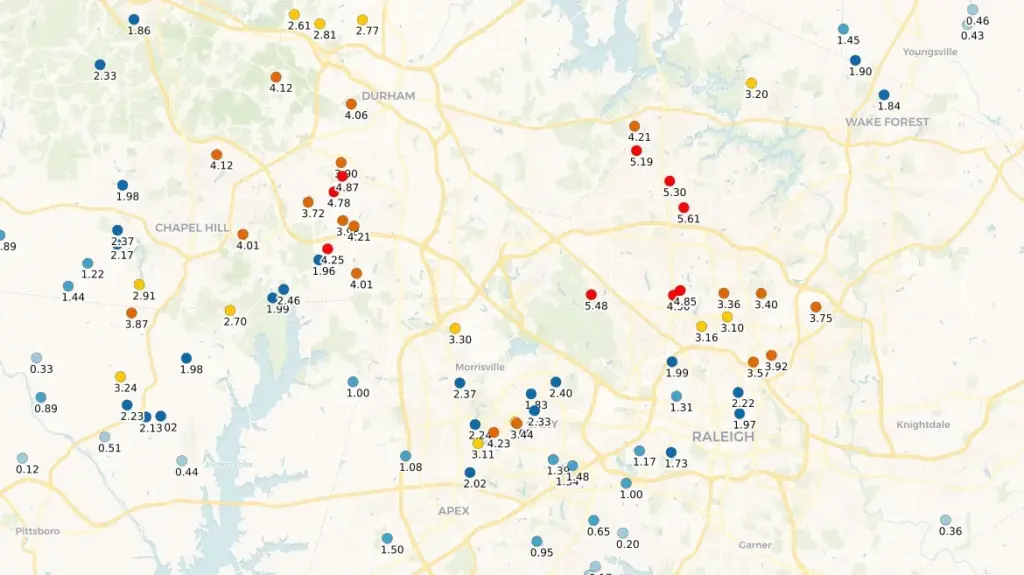
Since Monday, Wake County, just north of Raleigh, has recorded at least 5 inches of rain, according to the Community Collaborative Rain, Hail and Snow Network, also known as CoCoRaHS.
In western Wake County near Cary, more than 4 inches have fallen since Monday.
The rain has not just helped Wake County, with a large stretch of southern Durham County receiving 4 inches of rain or more in just two days, according to CoCoRaHS.
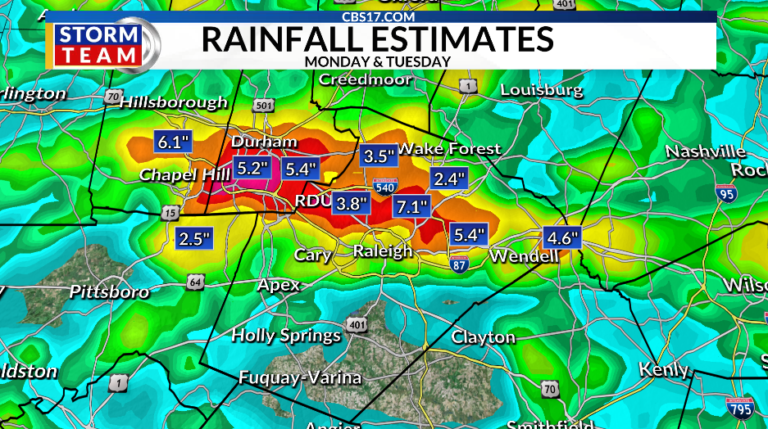
Orange County had less rain so far this week — but many areas have still recorded at least 2 inches, with 4 inches of rain in the southern areas near Chapel Hill and just north of Jordan Lake.
In Chatham County near Jordan Lake, there are several areas that received more than 2.5 inches of rain.
The rainfall on Monday and Tuesday in central North Carolina was the highest in the state, with many Wake County spots filling several of the top 10 places on at least one day.
Read more Fayetteville, Cumberland County reach agreement on joint 911 center hours before state deadline
Here is a list of the most rainfall and their locations in central North Carolina in 24 hours ending Wednesday morning:
Location		  Rainfall
miles from town/city	  inches

Chapel Hill 8.6 SSW 	  3.09
Durham 6.7 S 		  3.06
Chapel Hill 5.9 SW 	  2.59
Clayton 2.6 ESE 	  2.52
Chapel Hill 8.3 SSW 	  2.51
Morrisville 1.4 NW 	  2.47
Raleigh 5.8 NW	 	  2.29
Pittsboro 6.7 NE 	  2.21
Fearrington 1.4 SW 	  2.13
Wade  .3 SW 	 	  2.08
Durham 5.9 SSW 	  	  1.96
Chapel Hill 4.8 SSE 	  1.89
Durham 4.5 SSW 	 	  1.85
Raleigh 10.0 NNW 	  1.77
Cary 1.1 W 		  1.62
Wake Forest 5.9 WNW 	  1.36
Many areas that didn’t receive high rainfall amounts in the last 24 hours had high totals on Monday into Tuesday morning.
Here are the central North Carolina areas with the highest rainfall totals for 24 hours ending Tuesday:
Location		  Rainfall
miles from town/city	  inches

Raleigh 3.3 ENE 	  3.25
Raleigh 2.5 E 	 	  3.14
Durham 4.5 E 		  2.88
Durham 2.7 SSW 		  2.76
Durham 3.5 SSW 		  2.76
Raleigh 3.5 NNW        	  2.51
Raleigh 3.6 NNW 	  2.50
Durham 2.3 SW 		  2.37
Raleigh 6.9 N 		  2.34
Zebulon 5.4 E 		  2.34
Raleigh 5.8 NW 		  2.31
Hillsborough 4.0 SSW 	  2.22
Raleigh 2.7 NNE 	  2.20
Durham 3.6 S     	  2.09
Zebulon 2.5 SSE 	  2.07
Hillsborough 2.8 SSW 	  1.92
Durham 5.9 SSW 	 	  1.90
Durham 4.6 WNW 	  	  1.90
Durham 4.7 S 		  1.90
Raleigh 2.0 N 		  1.86
Raleigh 10.0 NNW 	  1.79
Hillsborough 1.8 S 	  1.77
Raleigh water restrictions started in April were aimed at keeping daily water use near 60 million gallons per day, with levels close to that through most of May, according to Raleigh officials.
But in June, water use was higher —- often above 66 million gallons per day —- which puts additional pressure on Falls Lake and Raleigh’s water supply.
MORE FROM CBS 17
DURHAM COUNTY NEWS
Storms bring needed rain to central NC – see totals
3K+ Durham customers lose power from damaged lines: Duke Energy
Flooding reported across Wake, Durham counties Tuesday
The heavy rains of the last two days are forecast to have some — but not much — impact on the current levels of Falls Lake and reservoirs for Durham, according to Linwood Peele, supervisor of the N.C. DEQ Division of Water Resources Water Supply Planning Branch.
The rain is beneficial, but the bulk of the heavy rain did not fall in the areas that feed into the various water supplies, Peele said.
The Raleigh City Council on Tuesday approved more flexibility to escalate the current water restrictions. This move allows the city to move quickly into Stage 2 Water restrictions if high use remains
Read more Strong El Niño prompts another cut to 2026 Atlantic hurricane forecast