 By admin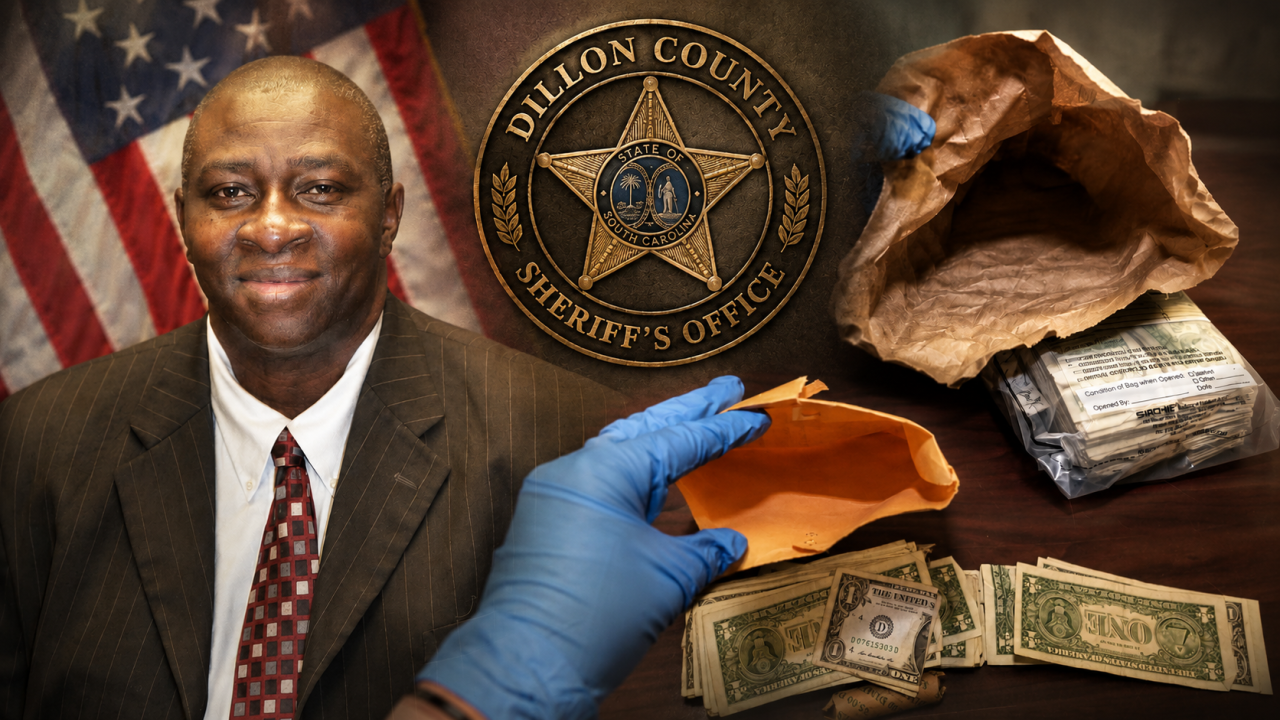
DILLON COUNTY, S.C. (QUEEN CITY NEWS) — A grieving wife, a grieving child, a handful of grieving friends, and a couple of deputies walked into Douglas Pernell’s office on August 22, 2023. They were there to do something they never thought they’d have to do.
Read more Summer pattern with heat and storms continue for central NC
They were loading boxes with things that belonged to Pernell.
Just 15 days earlier, on August 7, Pernell was at home when his heart stopped beating. At 61 years old, the lifelong lawman, drug cop, and Dillon County’s first black sheriff was dead.
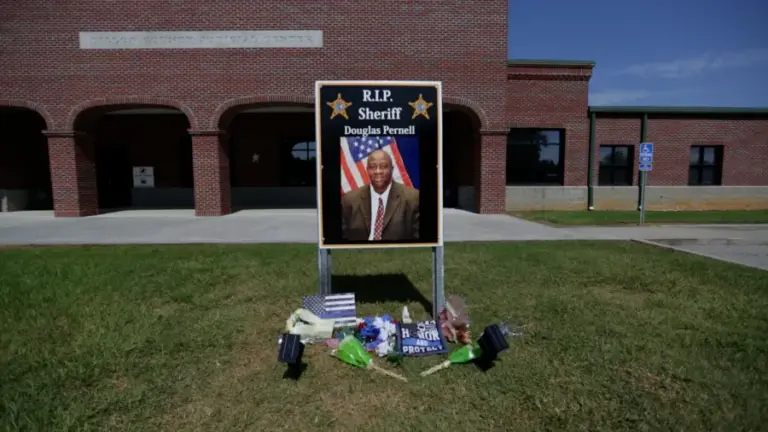
Sheriff Douglas “Humbunny” Pernell’s family and friends, which included S.C. Law Enforcement Division Special Agent Tempestt Hough—who is Pernell’s goddaughter and family friend—were clearing the plaques and pictures from the walls of his office and sifting through his desk drawers looking for things that didn’t belong to the county.
When they got to a drawer at the bottom of the credenza beside Pernell’s desk, the packing up stopped. The drawer was locked, and no one could find a key. A pair of Pernell’s deputies came up with a plan: they’d find a prybar to force the drawer open.
When the drawer slid open, the fluorescent lights hanging in the ceiling illuminated secrets that the most powerful law enforcement officer in Dillon County appeared to have kept from every person who knew him.
Those secrets made everyone a suspect, including the late sheriff’s own family and those inside his own administration who trusted him the most.
THE STATE INVESTIGATION
There were at least four veteran law enforcers inside Sheriff Douglas Pernell’s office the day that drawer was opened. They all likely knew—instinctively—that sealed evidence bags weren’t supposed to be there.
But they were. Some had cash inside; others were cut and torn open.
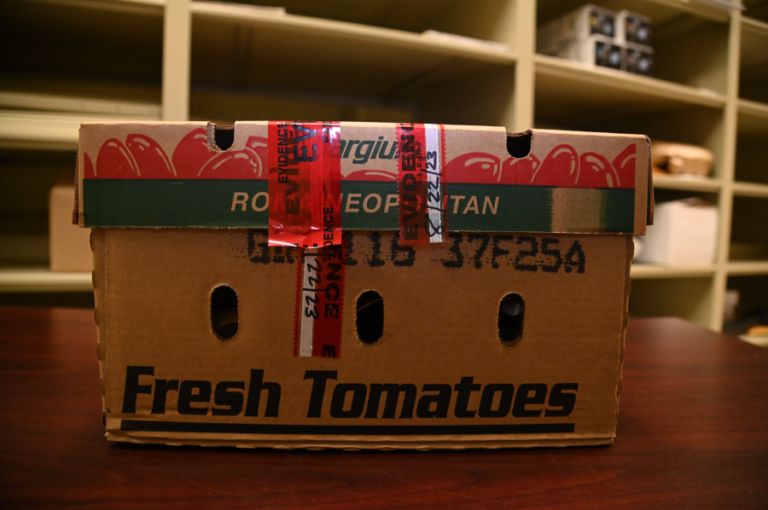
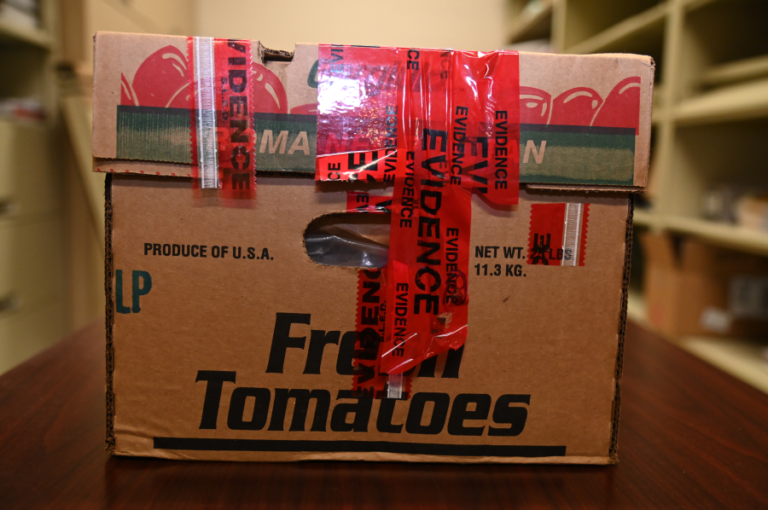
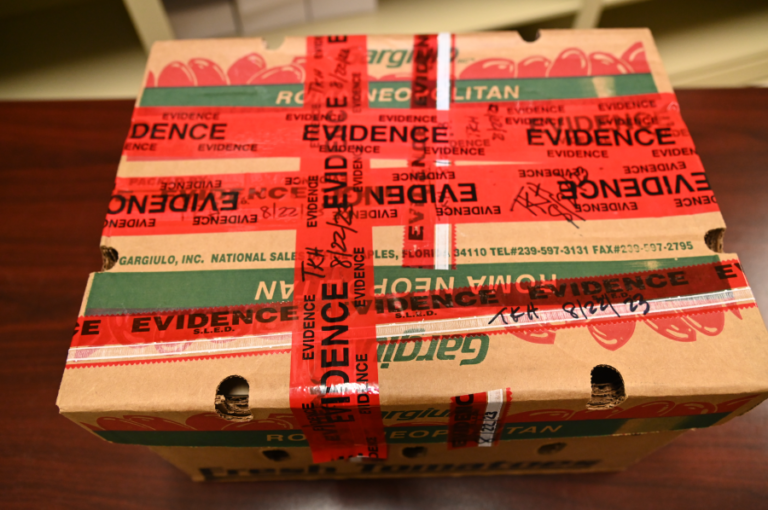
The lawmen, including Chief Deputy Jamie Hamilton, had every evidence bag, document, and dollar bill collected from Pernell’s drawer and placed into a cardboard tomato box. The box was sealed on all sides with evidence tape and placed in the sheriff’s office evidence vault.
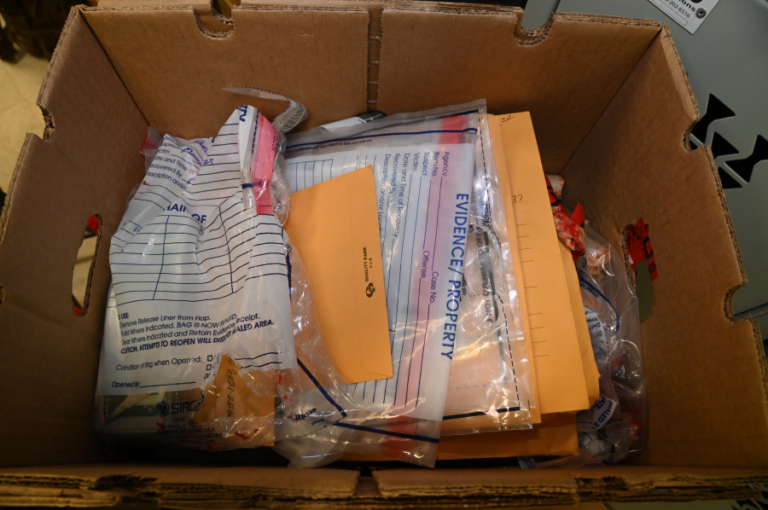
The following day, on August 23, 2023, SLED Captain Glenn Wood traveled to Dillon County to meet with Jamie Hamilton and three deputies at the sheriff’s office. The men opened the box, saw what was inside, documented it, and returned the box to the evidence room. The following day, Hamilton formally asked SLED to open an investigation.
On August 24, Hamilton verbally requested that SLED open an investigation. The investigation was to determine how the money got there, who opened it, who stole money from the cut and ripped open evidence bags, and how much was missing.
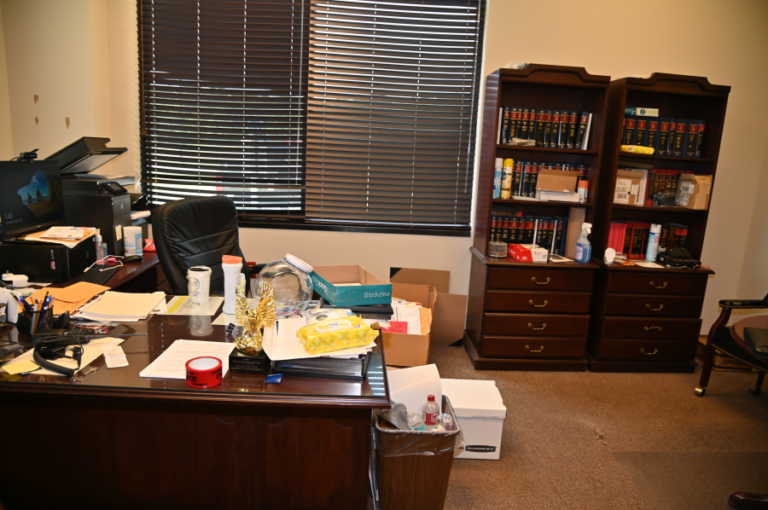
On August 28, nearly a week after the evidence bags were discovered, Wood, SLED Lt. Jacqueline Gause, and a SLED crime scene technician searched Pernell’s office and documented the contents of the tomato box.
Over the next four months, SLED agents interviewed the lawmen in Pernell’s closest circle, including a man who SLED described as the sheriff’s “right-hand man,” Pernell’s second-in-charge, Chief Deputy Jamie Hamilton.
SHERIFF PERNELL’S CASH GRAB
By the time SLED finished its investigation into the “misappropriated/stolen”—as Fourth Circuit Solicitor Will Rogers put it—drug seizure cash, agents documented 26 cash seizures conducted by Pernell’s Violent Crime Task Force totaling $90,644.40 between January 2021 and Pernell’s death in August 2023.
South Carolina law allows law enforcement to take cash in criminal cases if law enforcement believes it may be connected to crimes related to trafficking and distribution of drugs. The law also requires sheriffs to turn over those funds to the county treasurer, where they’re placed in an interest-bearing account until a judge decides what to do with them.
READ: GUIDEBOOK FOR SC SHERIFFS AND SEIZED DRUG CASH:
A circuit court judge has the authority to hold a hearing where he can decide, based on a preponderance of the evidence, meaning more likely than not, that the money is connected to criminal activity. If it’s not, the money plus interest is given back to the defendant. If the judge finds the money is connected to or derived from criminal acts, the money is forfeited to the government.
Agents found records of DCSO turning over $29,590 to the Dillon County Treasurer’s Office from a January 2023 raid of John Henry Cabbagestalk. Deputies found the cash buried in jars, according to Inv. Ryan Bethea. The money was damaged, and deputies took it to the bank and got a cashier’s check, which was later taken to the treasurer’s office and deposited in the account.
SLED confirmed $48,691.57 was missing from the evidence bags in Pernell’s drawer connected to the remaining 24 seizures conducted under Pernell’s watch: 18 of those bags were empty and the remaining six bags contained partial cash amounts totaling $3,454.83.
Although state law required Pernell to turn every dollar he seized into the Dillon County Treasurer’s Office, agents found he didn’t. The reason: Douglas Pernell ordered his staff to turn every dollar seized by his task force officers over to him.
“The second day Sheriff Pernell took office, he came into my office (and) he closed the door. He said, ‘Tell me about how we handle the money.’ I said, ‘well, Sheriff, which money are you talking about?” Lt. Wayne Kirby told SLED in an August 29, 2023, interview.
Kirby oversaw Pernell’s evidence vault, and only Kirby and Pernell had keys to the vault.
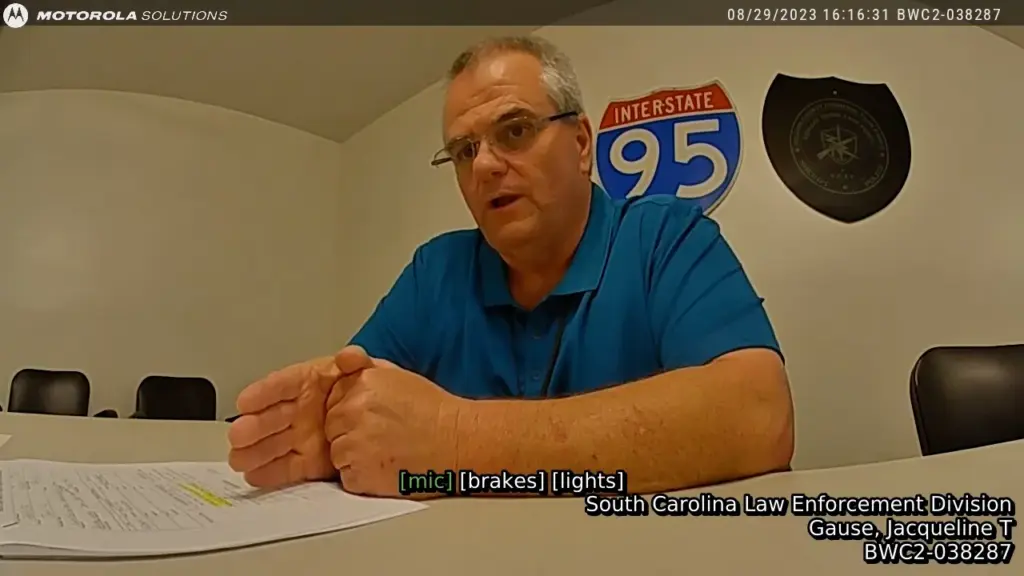
Kirby said he explained to Purnell every source of money the office deals with. Purnell, he told SLED, was interested in the cash his staff brings in.
“And that’s when I spoke up, and I said, ‘Sheriff, since now Troy (Task Force Commander Troy Jones) is going to be the head of the drug team, is Troy coming to get the money?’ He said no. He said, ‘Nobody up here needs to handle any money.’ I said, ‘Okay.’ He said, ‘I am the only one that needs to handle all the money.’ I said, ‘So you don’t want me to take the money anymore?’ He said, ‘That’s exactly right.’ He said, ‘I will tell the drug team all the money is turned in to me.’”
“He stopped me, and he said, ‘If any deputy comes here to try to give you cash money that doesn’t belong to a victim, you tell them to call me, and I’ll handle it,’” Kirby told SLED.
“Anytime we ever made a seizure, the sheriff told us from the get-go he don’t care if we’re making a traffic stop, search warrant, on the interstate; he always told us he didn’t want us to get tied up, so when we got money, make sure we called him. Said it didn’t matter when or where he was; he’d come to us,” Pernell’s Violent Crime Task Force investigator Ryan Bethea told SLED.
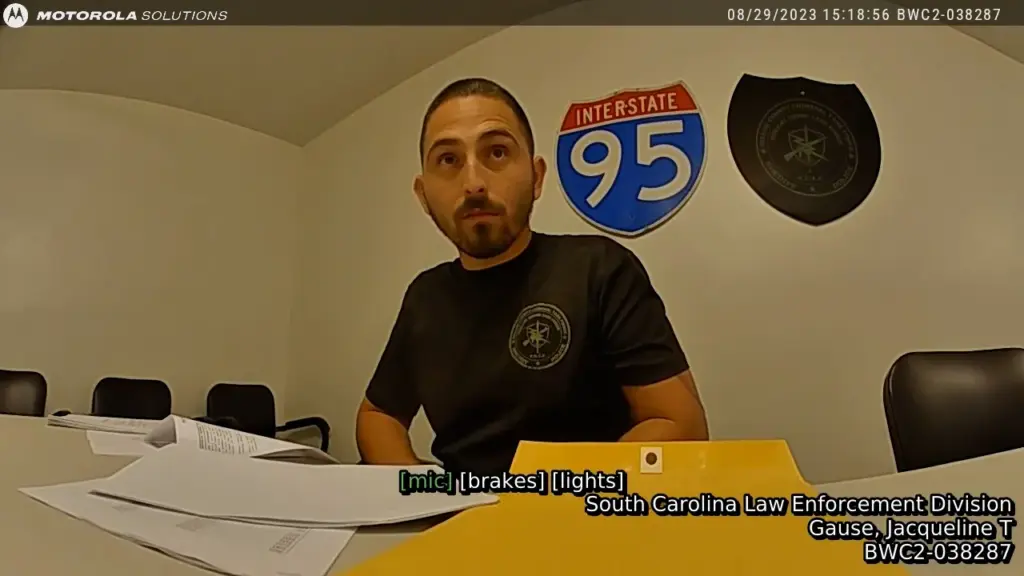
“So anytime we ever seized his money, that’s what we done; we called the sheriff, we go to the—normally to the sheriff’s office, and me, Troy, sheriff, Alan, we’d sit there, and we would count the money out together. Once everybody got a good count, felt confident it was there, we’d seal it up in a bag, and that’s when the sheriff would—usually he would put his initials on the bag or sign it. And then he took possession of it and took it to his office, and after that,” Bethea said.
Bethea also provided SLED with records showing every transfer of cash between himself and Pernell. Those records also included records of Pernell providing Bethea and Task Force Commander Troy Jones with drug buy money.
Queen City News
QCN INVESTIGATES
Sheriff dies; evidence of stolen drug seizure cash found in locked desk drawer
OFFICER DOWN: ‘Why’ in McBee cop’s 2024 ambush will never be answered
OFFICER DOWN: McBee cop ticketed drivers posing as other officer in ‘quota scheme’
The task force used the drug buy money to give to confidential informants to purchase illegal narcotics in pre-arranged drug buys used to investigate and bring charges against suspected drug dealers in Dillon County. Bethea told SLED that Pernell did not keep records of the buys and didn’t require his narcotics unit to fill out paperwork when he’d hand them money.
“Really wasn’t much of a process,” Bethea told SLED in his August 29, 2023, interview.
“Call up the sheriff, tell him we were out of money and wherever we were at, he’d come meet us. He’d reach in his pocket, pull out a wad of cash, count out—be different amounts—$300, $400, $500, and hand it to us, and that was the process from day one until the last day.”
Bethea said Pernell would put the remainder of the “wad of cash” back into his own pocket and leave. Although Pernell did not keep records of those drug buy-cash transactions at the time they happened, Bethea did.
Ryan Bethea turned all of his records related to the drug buy transactions over to SLED.
Task Force Commander Troy Jones corroborated Bethea’s drug buy money story during his own SLED interview, right down to Pernell pulling cash from his own pocket to hand the officers. Jones also told SLED he never met with Pernell for the drug buy money handoff alone.
That, according to Jones’ SLED interview, seemed intentional. Jones told SLED the sheriff wanted copies of the drug buy vouchers at the end of the buy operations.
Both task force officers walked SLED agents through the process of what happened when they’d seize cash. They’d seal the cash on the scene where they seized it and would call Sheriff Pernell almost immediately. The sheriff would then meet them at the squad room inside the DCSO, and they’d unseal the evidence bags and count the cash.
Once everyone agreed on an amount, the cash was sealed into a new evidence bag, the drug officers would sign the bag , hand it to the sheriff, and they’d never see the bag again, according to the officers’ interviews with SLED.
“When the sheriff would leave with the money, do you have any idea what he was doing with it?” Gause asked Jones. “No, we don’t see that no more, none of that.”
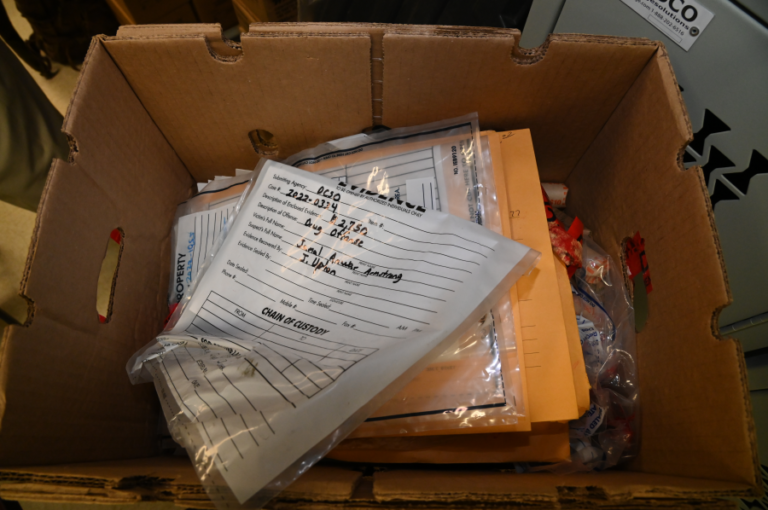
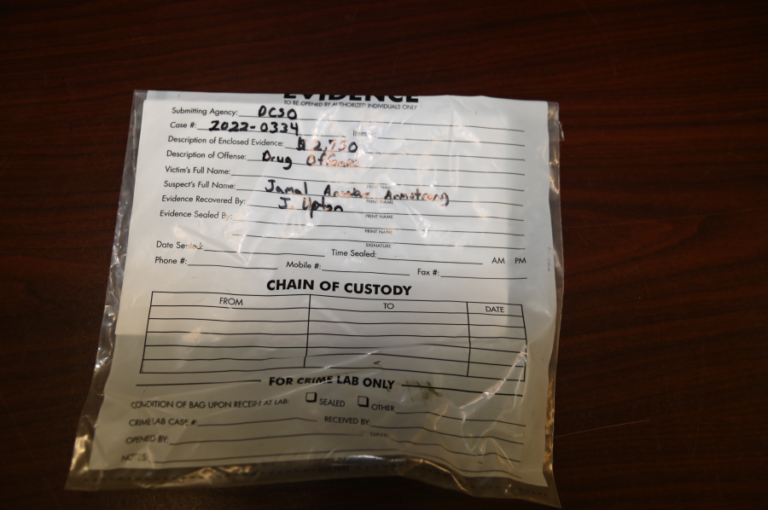
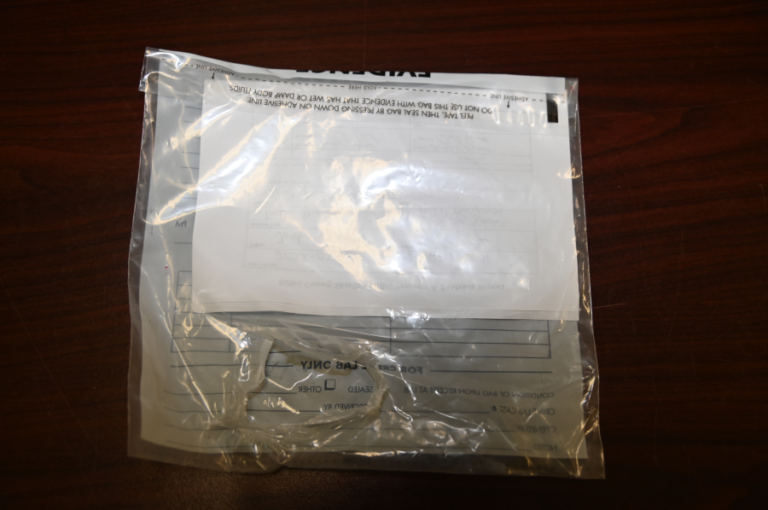
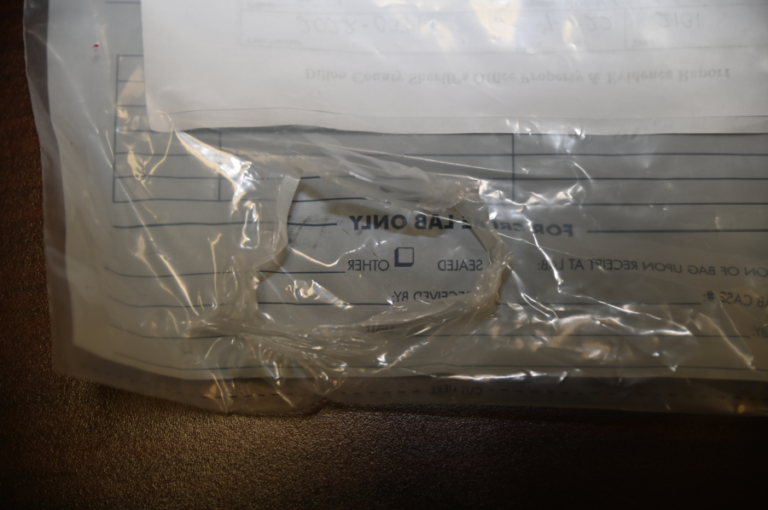
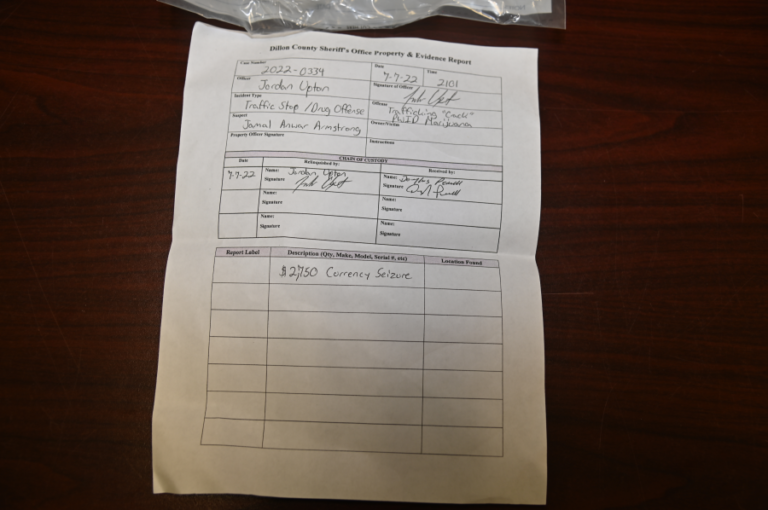
Bethea confirmed that every bag of cash they ever handed Pernell was sealed inside an evidence bag. The officers also told SLED the sheriff never filled out an evidence sheet on the cash seizure transfers.
Here’s a partial transcript of the SLED interview with Inv. Ryan Bethea on that line of questioning:
SLED: “Did you find that odd that there was no evidence sheet completed on money you provided to the sheriff?”
BETHEA: “Very.”
SLED: “And what was the reason why you were doing it the way you were doing it?”
BETHEA: “Well, basically, just the sheriff told us anytime you ever get money, I don’t care where you’re at or what you’re doing; call me. The money goes to me. And he told us that way there ain’t no question about where the money’s at or questions about anything. Everybody knows the money comes to me.”
SLED: “So for your documentation in your case files, do you have a list of money you seized in your cases?”
BETHEA: “I do. I’ve always kept copies of consent orders and the receipts, cash receipts.”
SLED: “And there’s consent orders and receipts generally was going with the money to the sheriff as well, right?”
BETHEA: “Right. Everything he had, I made sure I kept copies of.”
SLED: “So everything you provided him, you have a copy of?”
BETHEA: “Right.”
SLED: “And this was common practice?”
BETHEA: “This was—from day one he told us if y’all get money, call me. It don’t matter what time of day it is; call me because I don’t want y’all getting caught up in nothing. If you give the money to me, we’ll know where it’s at.”
“The times that y’all would meet with the sheriff to give him the seizures for the money, he would take the evidence bag. Do you have any idea where he would go from there?”
BETHEA: “All I know is (it went) into his office.”
SLED: “So, you would generally see him; once you’ve done that transfer, he would go into his office?”
BETHEA: “Right.”
BETHEA: “Most of the time we would count it in that squad room, put it out on the table in there, count it, take pictures, then seal it up, sign the bag, do the paperwork, and he (Pernell) would take it with him and go to his office.”
SLED: “And there was nothing the sheriff would sign once you had transferred that money over to him?”
BETHEA: “No.”
SLED: “Nothing to document, y’all—chain of custody, basically, to evidence?”
BETHEA: “No.”
Bethea also could not tell SLED where in Pernell’s office he stored the cash. Neither could Troy Jones, as both men said once they handed it to Pernell, they never saw it again.
PERNELL TOOK THE JAIL’S ‘FLOWER FUND’
The drug seizures weren’t the only money Pernell’s staff said he got his hands on and they never saw again. During SLED’s investigation, agents ended up inside the jail administrator’s office conducting an interview with Captain Sarah Samuel.
Samuel was Pernell’s jail director and still holds the title today.
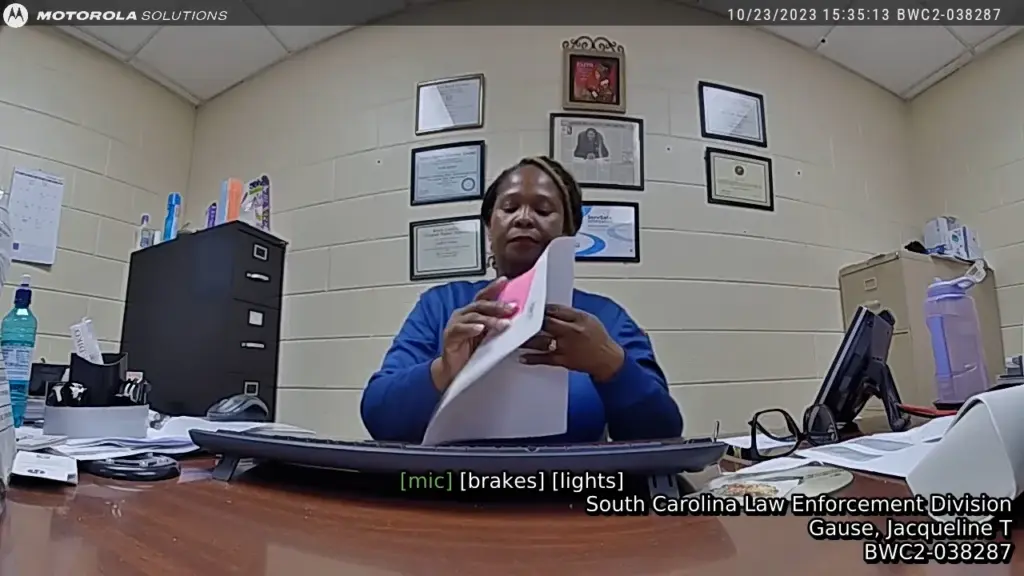
In 2004, Samuel and her staff decided to set aside eight dollars from their paychecks to start the Sarah White Flower Fund. Bonus checks the jail received from the food vendor would also go into the fund, Samuel told SLED.
The jail staff used the money to purchase flowers when someone died and to fund the jail’s Christmas party. Samuel said they also purchased a refrigerator for the jail staff breakroom.
When Pernell took over in January 2021, Samuel said she did with Pernell what she did with every other sheriff when they’d take office: she’d explain the account and would seek the new sheriff’s approval to continue it. Every sheriff approved of it and never touched the money, Samuel told Special Agent Jacqueline Gause in an October 2023 interview.
“He told me to just hold onto it, and he’ll let me know when to close it,” Samuel told Gause.
Samuel said Pernell told her that on his first day in office in January 2021. On Jan. 17, 2023, Samuel said Pernell ordered her to close the account and bring him all the cash from it.
Here’s a partial transcript of the questioning between SLED and Samuel:
SAMUEL: “He told me to go ahead and close that account and bring him the money.”
SLED: “What did you say back to him?”
SAMUEL: “I said, Sheriff, give me an hour because I was in the process of doing something, and I will go to the bank and bring you back the money.”
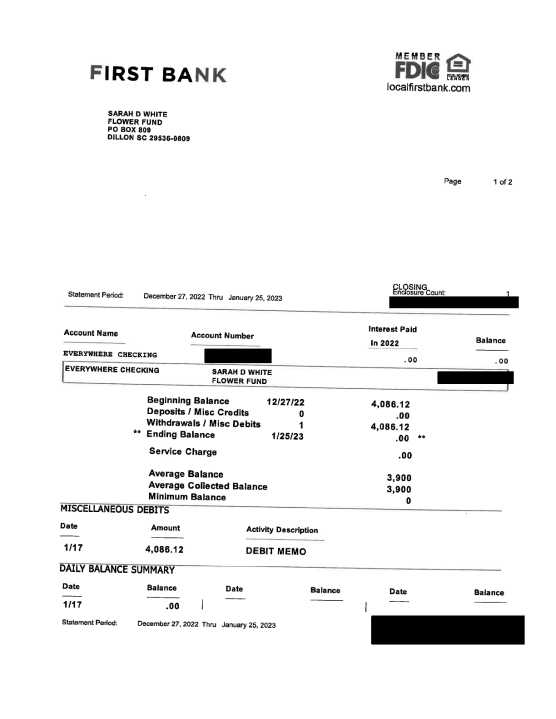
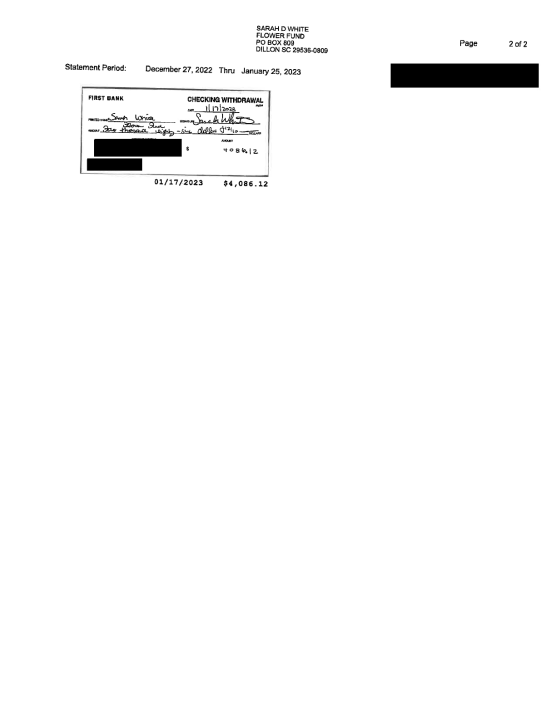
Samuel told SLED she went to the bank in Dillon, closed the account, and the bank issued her a check for the balance of $4,086.12.
Pernell, she said, wanted cash.
SLED: “And who is the check paid to the order of?”
SAMUEL: “It was written out to me, because they cashed it and gave me cash for it so I can give (it) to him. Because he told me, ‘Don’t write a check’; he told me to get cash for the account.”
SLED: “Specifically told you he wanted cash?”
SAMUEL: “That is correct.”
Samuel said she met Pernell in the parking lot of the Dillon County 911 center. She rolled down her window and handed him the $4,086.12—every penny from the jail flower fund—as he sat inside his black Chevy Silverado patrol truck.
And that was the end of the bank account.
SLED: “Did Sheriff Pernell ever indicate what he was going to use this money for?”
SAMUEL: “No, ma’am.”
SLED: “Do you have any idea what Sheriff Pernell did with the money?”
SAMUEL: “I do not.”
SLED: “You think Sheriff took that money for his personal use, Mrs. Sarah?”
SAMUEL: “I don’t know what he did with it, but all I know is I gave it to him on that date. But I know the jail didn’t benefit from it after I gave it to him. He did nothing for the jail with that money like he said he was.”
TROUBLE FROM THE START
By the time SLED agents got to her office on Oct. 23, 2023, elected Dillon County Treasurer Jamie Estes was ready to tell her story. Estes recognized trouble with Sheriff Douglas Pernell’s handling of seized drug cash in the infancy of his administration.
Estes and her staff saw a press release in the local newspaper announcing the seizure of drugs, guns, and cash related to a drug case Sheriff Pernell’s deputies made a few weeks earlier. The problem: None of that cash made it to the Treasurer’s Office as required by state law.
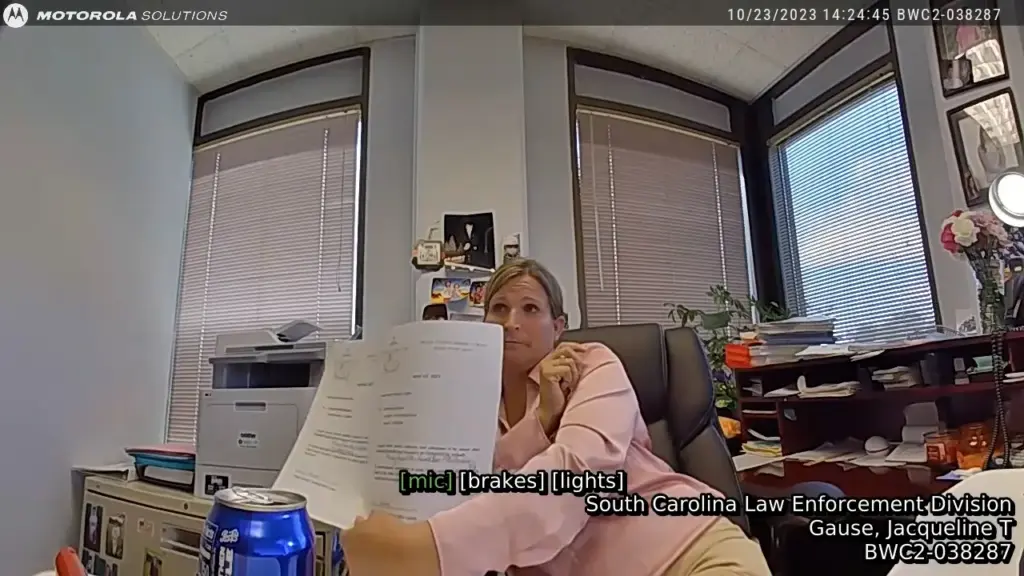
And Estes, a 21-year veteran of the treasurer’s office, told SLED she went right to the source. Here’s a partial transcript of that exchange between SLED and Treasurer Estes:
ESTES: “After Sheriff Pernell took office, I did not receive any funds. However, I did keep seeing busts in the paper with the cash and the guns and all the other stuff, but none of that ever made it to my office. That is when I first said, ‘Look, if you get seized money and I get an order to pay it, I’m going to send it back to the judge because I don’t have it. I just wanted them to understand that I’m not taking responsibility for that.’”
SLED: “Did you inform Sheriff Pernell of that?”
ESTES: “Yes.”
SLED: “And did you do that in writing or verbal?”
ESTES: “That was a verbal.”
SLED: “How long after he started being the sheriff of Dillon County did you have that conversation with Sheriff Pernell?”
ESTES: “That was probably 3 or 4 months in.”
SLED: “Did you meet with him at the sheriff’s office or he—”
ESTES: “He came here. He was in here for unrelated (reasons)—I’m not even sure why he was here—but while he was here, I wanted to make sure that he understood that if I did not receive the funds, I could not give the funds out if we got an order.”
SLED: “So you addressed with him there hadn’t been any type of—”
ESTES: “Deposit.”
SLED: “Deposits made. What did Sheriff Pernell say to you?”
ESTES: “He was handling it.”
Estes told SLED she didn’t stop with Pernell. Over the next two and a half years—right up to Pernell’s death—the treasurer said she told three different Dillon County administrators, had a conversation with Fourth Circuit Assistant Solicitor Shipp Daniel, and talked to Pernell’s closest confidant: Chief Deputy Jamie Hamilton.
SLED: “Did you ever have any communication thing other than the sheriff about seized funds?”
ESTES: “I had told Jamie (Hamilton), as well, that I did not have any deposits and he didn’t know—I don’t think he understood what the sheriff was doing at that point with how he was handling the funds. And I just said, ‘Look Jamie, if I don’t get the money’—this is after I had talked to Douglas a couple of months after—’I said if I don’t have the money, I can’t pay the orders.’ He said, ‘I’ll let him know. I said, okay.’”
Estes said she never heard any resolution from Hamilton or the county administrators, she asked to notify Pernell about his mishandling of seized drug funds.
Estes did hear from Shipp Daniel. Of all the people she passed along her concerns related to the sheriff’s handling of the drug seizures, Daniel is the only person in SLED’s investigation who appeared to take action.
In early 2021, the SLED report shows Jamie Hamilton and Shipp Daniel met to talk about Pernell’s handling of the seized drug cash. Hamilton, who said he did not know the law on how to handle seized drug cash despite his years of experience working as a narcotics officer for the City of Dillon Police Department, suggested that Daniel speak with Pernell himself.
Daniel and Pernell had that discussion. When Daniel followed up with Treasurer Estes in 2022 to find out whether she received any drug seizure deposits from Pernell, that led him to issue a more formal notice to Pernell about the laws of how to properly handle drug seizure funds.
On March 17, 2022, Daniel asked the S.C. Sheriff’s Association for a copy of its Asset Forfeiture guidebook, a simplified explanation of the state law on what sheriffs are required to do with this cash once they take it from a defendant. Daniel told SLED he not only sent the document to Pernell, but he also forwarded the email to Chief Deputy Jamie Hamilton.
Our investigation into this now-closed SLED investigation unpacks who knew what and when. We also question why the new Dillon County Sheriff and county leadership waited nearly three years to start the process to refund the people who lost that stolen money—money that did not belong to the Dillon County Sheriff’s Office in the first place.
The county didn’t act to refund any of the money until months after we filed an S.C. Freedom of Information Act request and opened our own investigation into why Dillon County hadn’t made this right.
Read more 40,000 year-round students return to school in Wake County as district handles growth
Watch our complete report in the video boxes at the top of this article.